Key takeaways
- Pick and pack means pulling the right items for one order, packing them safely and labeling the box for the carrier.
- Most warehouses charge a first-item fee per order plus a smaller fee for each extra item.
- At Treasure World, pick and pack starts at $2.75 for the first item and $0.50 for each extra item at 1-250 orders a month.
- Postage, packaging materials and special inserts are usually separate lines, so compare full quotes, not just the headline rate.
What is pick and pack?
Short answer: it's the middle of every online order. A customer clicks buy, and somebody in a warehouse has to walk to a shelf, grab the right thing, put it in a box and stick a label on it. That's it. That's pick and pack.
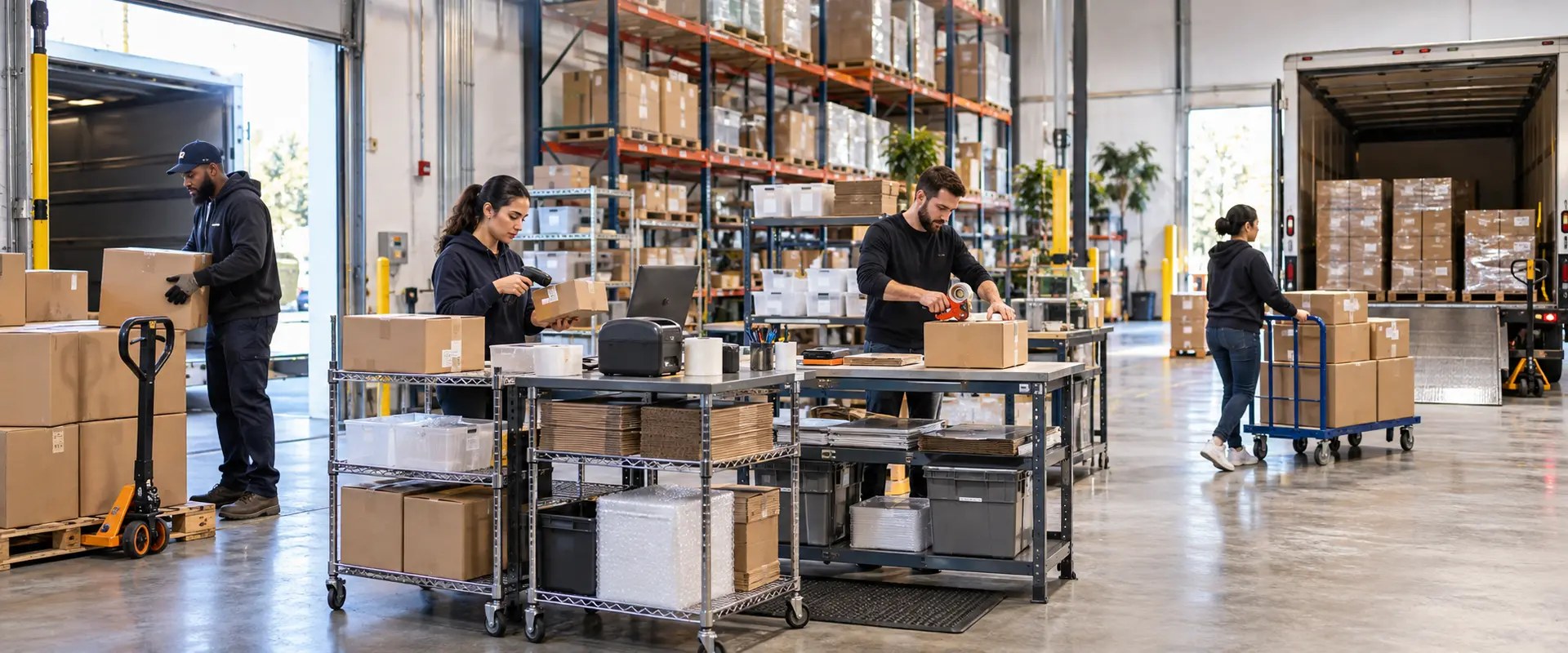
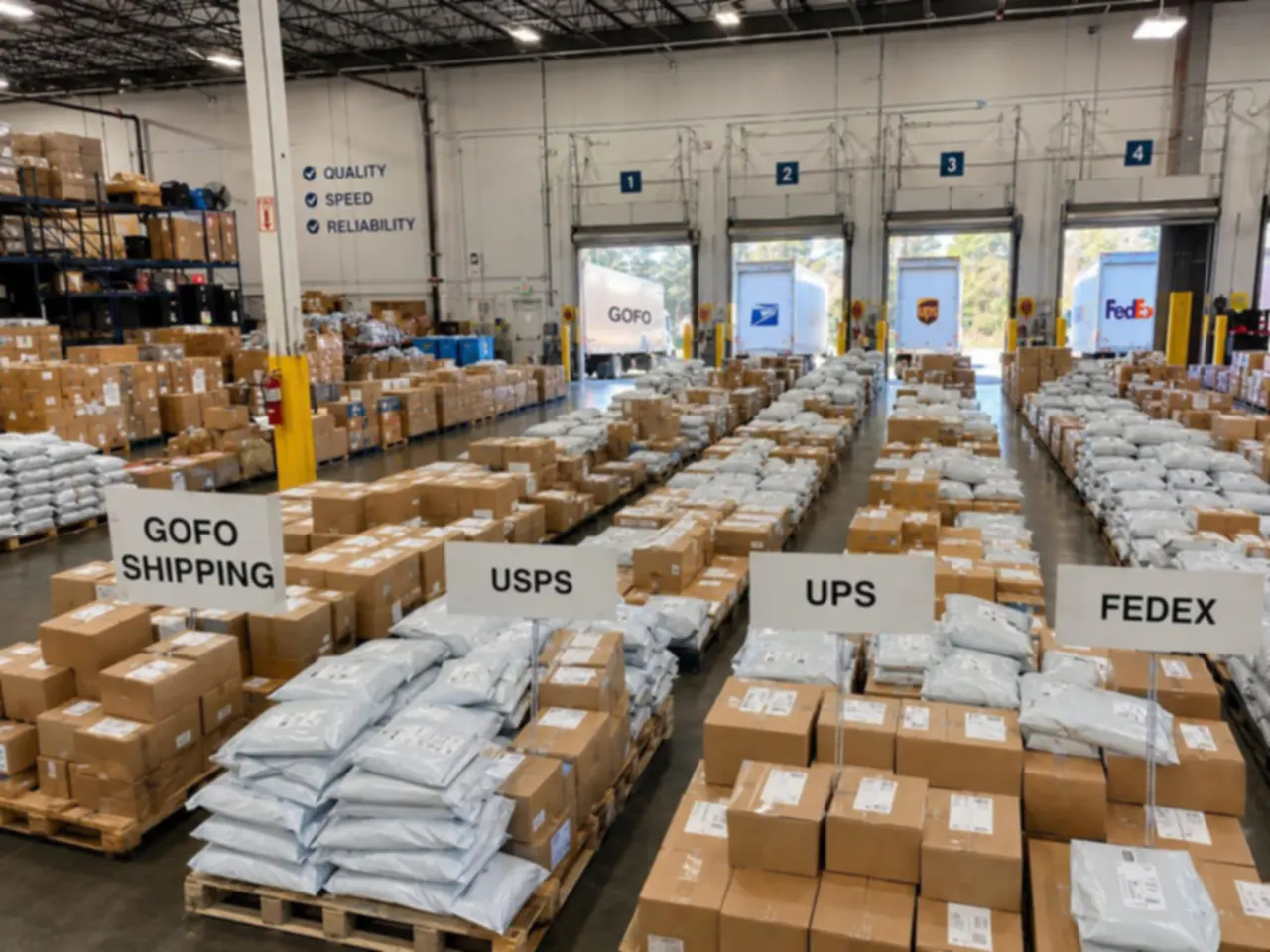
So when sellers ask us what is pick and pack, we usually answer with a picture of our own floor in Niles, Illinois. Orders come in, a picker pulls the items, a packer checks them and boxes them up, and the finished parcels get sorted by carrier for pickup. Simple on paper. The details are where orders go right or wrong.
This guide walks through the pick and pack process step by step, explains how the pick and pack fee is usually built, and shows what we charge so you have a real number to compare against.
The pick and pack process, step by step
Every warehouse has its own habits, but the order fulfillment process almost always follows the same basic path.
- 01
The order reaches the warehouse
Your store or marketplace order gets shared with the team. How that handoff works (file, email, shared sheet or something else) is confirmed during onboarding.
- 02
Picking
A picker finds each SKU on the shelf and pulls the exact quantity. Barcodes matter here. If two items look alike, a scannable barcode is what keeps the wrong one out of the box.
- 03
Checking
Before anything gets sealed, the items are matched against the order. Wrong size, wrong color, missing piece? This is the moment to catch it, not after the customer opens it.
- 04
Packing
The packer picks a box or mailer that fits, adds protection where needed, drops in any inserts or packing slips, and seals it.
- 05
Labeling and dispatch
The shipping label goes on, the parcel gets sorted by carrier, and it waits for pickup. We have scheduled pickups Monday through Saturday for GOFO, UPS, USPS and FedEx.
Five steps. If anyone asks you what is pick and pack after this, that list is the answer. Every single order goes through it, whether it's one t-shirt or a box with six different SKUs.
Picking methods you might hear about
You don't need to run a warehouse to use one, but a few terms come up in quotes and calls, so here's the plain version.
Single order picking
One picker, one order, start to finish. Easy to follow and great for smaller volumes or bulky items.
Batch picking
The picker grabs items for several orders in one trip, then they're split up at the packing table. It saves walking when lots of orders share the same few SKUs (think a store with one best seller).
Pre-packaged picks
Some products are already in a box that can ship as is. The team just pulls it and labels it, no repacking. That's usually cheaper, and we list it as its own rate below.
Which method a warehouse uses is mostly their business. What matters to you is accuracy and speed, and whether the price reflects how your orders actually look.
How a pick and pack fee is usually built
Here's where people get confused. "Pick and pack" sounds like one price, but most quotes split it up. The common pattern is a fee for the first item in an order, a smaller fee for every extra item in that same order, and then add-ons for anything unusual.
Why split it? Because the first item carries most of the work: pulling up the order, grabbing a box, labeling, sorting. The second and third items add a few more picks, not a whole new order.
What usually sits outside the pick and pack fee:
- Postage. The carrier label cost is its own line almost everywhere.
- Packaging materials like boxes, mailers, tape and filler, unless your quote includes them.
- Branded inserts, gift notes and custom packaging.
- Heavy items, rush orders and weekend work.
- Receiving and storage, which happen before an order is ever picked.
So when two warehouses quote different pick and pack rates, line them up item by item. A low first-item fee with a pile of extras can end up costing more than a higher, cleaner number.
Our posted pick and pack rates
We can't speak for every 3PL, but here's what we post for ecommerce fulfillment at our Chicago-area warehouse:
- 1-250 orders/month
- $2.75 first item per order
- 251-500 orders/month
- $2.35 first item per order
- 501-1,000 orders/month
- $2.10 first item per order
- 1,001-5,000 orders/month
- $1.85-$2.00 first item per order
- Each additional item
- $0.50 per item
- Pre-packaged item pick
- $1.25 per order
- Branded insert
- $0.20 per order
- Gift note / packing slip
- $0.30 per order
- Heavy item, 21-30 lb
- +$2.00 per order
A quick hypothetical
Say you ship 200 orders a month. Half are one item, half are two items, and every box gets a thank-you card you supply. That's 200 orders at $2.75 = $550, plus 100 extra items at $0.50 = $50, plus 200 inserts at $0.20 = $40. Around $640 for the month, before postage, materials and storage. Not the whole bill, but now you know which part is the pick and pack piece.
Storage is billed separately. If you want that side of the math too, our post on how much a 3PL charges breaks down receiving, storage and fulfillment together, and the full rate card is on our pricing page.
What slows pick and pack down (and costs you)
Most problems we see on the floor don't come from the warehouse. They come from what arrives at the dock.
Products without barcodes are the big one. Every unlabeled item has to be identified by eye, which is slow and is how mix-ups happen. If your products need labels, fix it once at receiving with product labeling instead of fighting it on every order.
Then there's look-alike SKUs (same bottle, different scent), loose parts that should've been bagged together, and fragile items with no packing instructions. Each one adds a few seconds or a question. Over a few hundred orders, that's real time.
Last thing: changing instructions by email without updating the work order. A packer can only follow what's written down. Keep one clear spec per SKU and you'll get the same box every time.
When it makes sense to outsource pick and pack
If you're packing orders on the kitchen table and it's eating your evenings, that's usually the sign. Same if you've run out of room, or you sell on more than one channel and keeping stock straight is getting messy.
Our order fulfillment services handle orders from Shopify, Amazon FBM, Walmart, eBay, Etsy, TikTok Shop and more from one building, so inventory sits in one place. If you're weighing it up, our guide to 3PL vs in-house fulfillment lays out the tradeoffs honestly.
And no, you don't need to be in Illinois. Plenty of sellers ship inventory to our Chicago 3PL from elsewhere. If you want a number for your own order mix, request a quote with your monthly volume and a few sample orders.