Why product inspection services in Chicago pay for themselves
A factory tells you the order shipped perfect. Then the first customer review mentions a cracked lid. Then a second one. By the time you figure out that 1 in 20 units left the factory damaged, a few hundred of them are already out in the world. Product inspection services in Chicago exist so you find that out at our dock, not in your reviews.
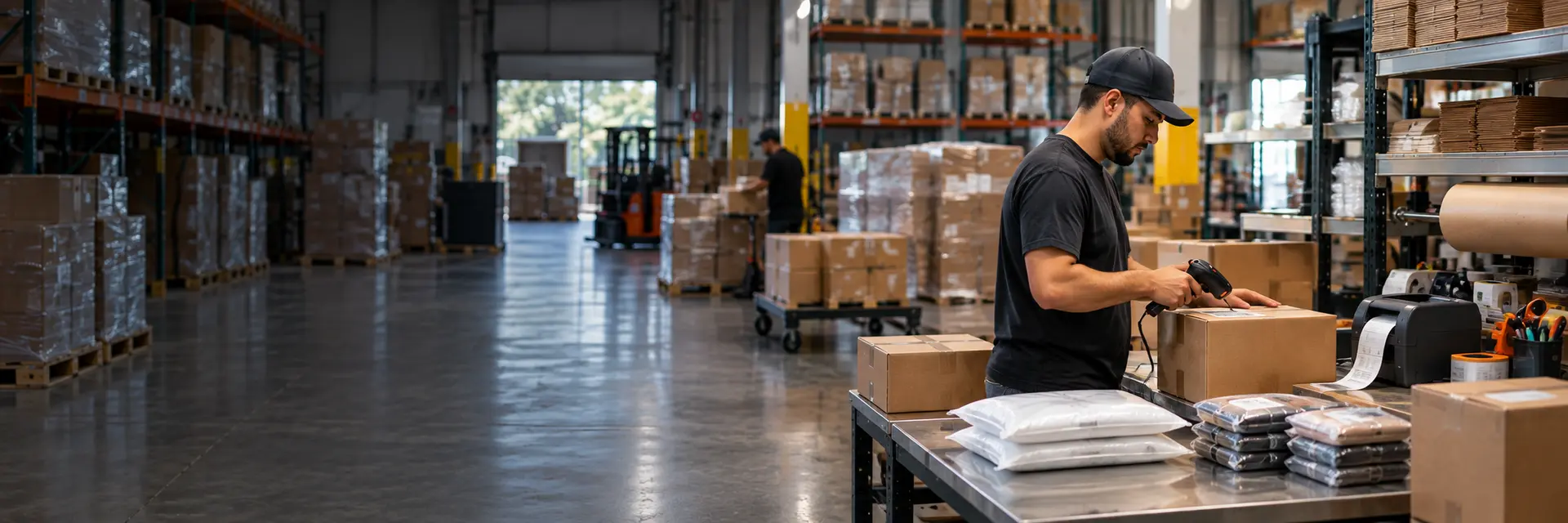
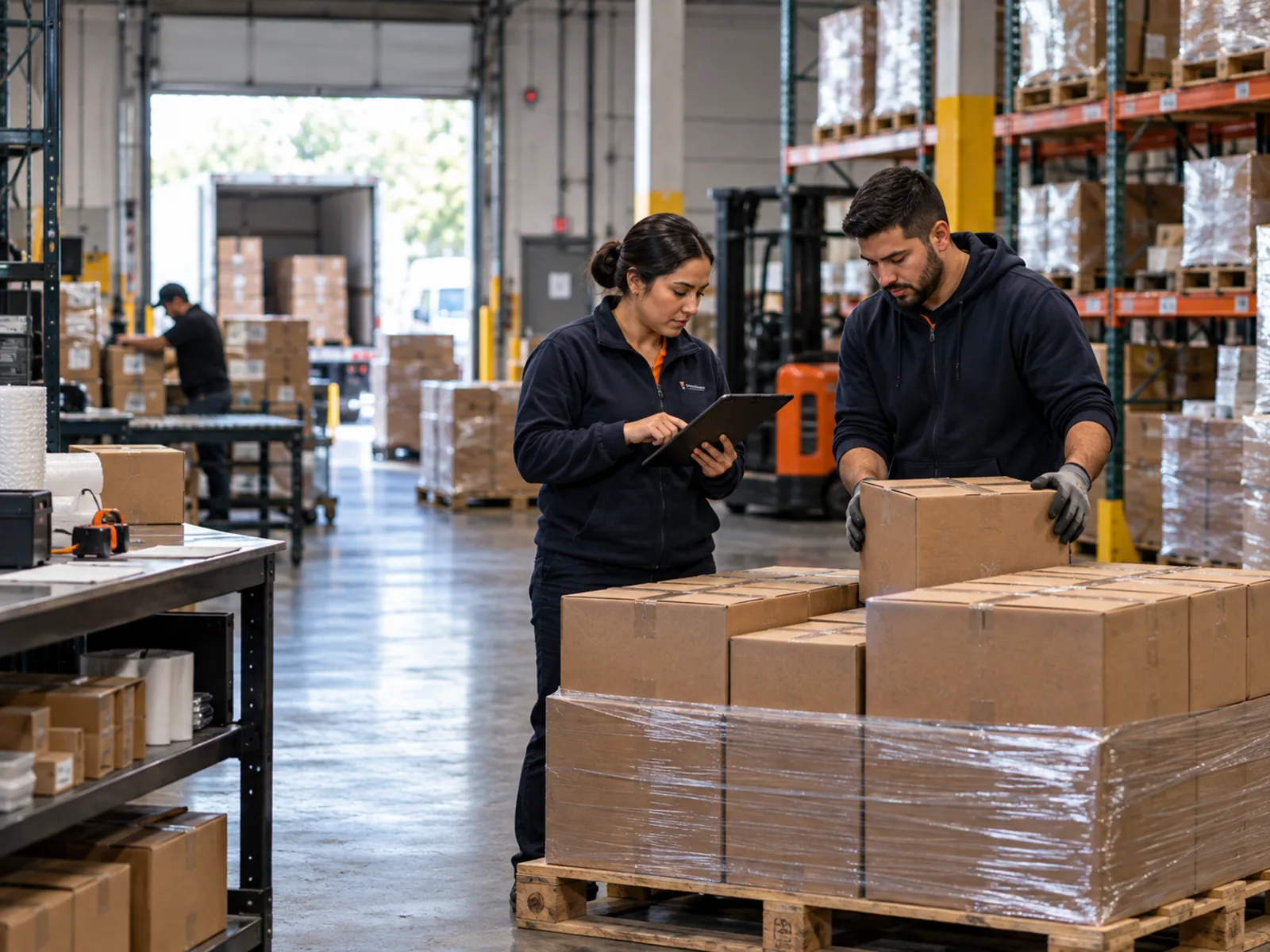
Treasure World Prep Center does inspection and QC at our warehouse at 5673 W Howard St in Niles, Illinois. Inventory arrives, we open what you ask us to open, and we check it against a standard you set. Damaged units get pulled. Wrong items get flagged. You get photos and notes instead of a vague "looks fine."
It's not glamorous work. Box cutter, good light, a checklist and someone who actually reads it. But it's usually the cheapest insurance against returns you can buy.
Four levels of quality inspection
Not every shipment needs the same scrutiny. Here's how the work breaks down.
Basic visual QC
The quick pass. We look for obvious damage, check the packaging condition and confirm quantities match. Crushed corners, torn retail boxes, a carton that's three units short. $0.25 per unit. Most sellers add this to new suppliers and first orders, and some just run it on everything.
Detailed inspection and grading
Deeper. Cosmetic grading, working through a defect checklist, taking measurements against a spec. Think scratches on a finish, stitching on a bag, whether a cap seals properly, or whether a lot of liquidation stock is "new," "like new" or "used." $0.75 to $1.50 per unit, depending on how much the checklist asks for.
Weight and dimension capture
We weigh and measure one verified sample per SKU, $1.50 per SKU. Useful when supplier specs don't match reality, which is more often than you'd think. Wrong dimensions can mean wrong fees, wrong box sizes and wrong shipping quotes.
Evidence and damage photos
When something's wrong, you need proof. The first 3 evidence photos are free, then $1 per photo. Those come in handy for supplier credits, carrier claims or just showing your team what arrived.
Anything that doesn't fit those buckets (unusual checklists, big sort-and-inspect projects) runs at standard labor of $40 an hour, and we tell you that before we start.
What product quality checks can and can't tell you
Worth being straight about this. Our inspection is hands-and-eyes work in a warehouse. We check what can be seen, counted, measured and compared against a checklist.
We don't do lab testing. We don't certify products for safety or regulatory standards, and we can't tell you whether something meets a government rule. If your product needs that kind of testing, it should happen with a qualified lab, usually before the goods leave the factory.
So what do we mean by product compliance checks? Checking inventory against the checklist you give us, or against marketplace requirements you share (labels present, barcode visible, packaging intact, the right variant in the box, warnings where your checklist says warnings should be). It's a match-the-spec check, not a certification. Simple distinction. Important one.
How an inspection job runs
- 01
Send your checklist
What to look for, what counts as a defect, how many units to check and what to do with failures. Photos of a good unit help a lot.
- 02
Confirm scope in the work order
Basic or detailed, all units or a sample, measurement needs, photo needs and where passed inventory goes next.
- 03
Inventory comes in
Boxes or pallets arrive at receiving and get counted. Inspection starts once the counts match what you expected, or once you approve going ahead.
- 04
Inspect, report, move on
Units get checked to your standard. Failures are set aside with notes and photos, and the good stock heads to prep, storage or fulfillment.
Same onboarding rule as every other service: verification has to be approved and inbound instructions confirmed before inventory ships to us.
The clearer the checklist, the better the result. "Check for damage" gets you a basic pass. "Reject any unit with a scratch longer than half an inch on the front face" gets you exactly what you want.
Building a checklist we can actually follow
Most inspection jobs live or die on the checklist. You don't need a 12-page document. You need something a person on the floor can read in 30 seconds and apply the same way to unit 1 and unit 900.
A good one usually answers these:
- What does a perfect unit look like? A photo or two beats a paragraph.
- What's an automatic fail? Cracks, missing parts, wrong color, broken seal, stains.
- What's a judgment call, and which way should we lean? A tiny scuff on the inside of a box might be fine. On the front of the product, maybe not.
- Which labels, barcodes or inserts must be present, and where?
- What happens to failures? Hold, photograph, return to vendor, dispose, or regrade.
If you don't have a checklist yet, that's okay. Send us a few photos of good and bad units and the team can help you turn it into something usable during the quote. We'd rather spend ten minutes on that up front than redo an inspection because "damaged" meant two different things to two different people.
One more tip. Start strict on the first shipment, then loosen up. It's a lot easier to relax a standard that's working than to tighten one after bad stock already went out.
Who needs inventory inspection most
New suppliers, first of all. The first order from a new factory is where most surprises happen. Running every unit through basic QC on that first shipment, then switching to spot checks once you trust them, is a common pattern.
Private-label brands launching on Amazon or Walmart. A bad first batch can sink a listing's ratings before it gets going, so inspection before Amazon FBA prep or WFS prep is cheap protection.
Liquidation and arbitrage buyers. When you buy a pallet of mixed returns or closeouts, nobody promised you condition. Grading tells you what you actually own and what it's worth.
Wholesale shippers. Retail buyers can be strict about case contents and carton condition, so a quick check before B2B and wholesale fulfillment avoids chargebacks you didn't need.
And sellers sorting through returned goods. That's its own service, though: returns, removals and refurbishment covers return-specific grading and restocking.
What good warehouse QC services change for you
Fewer bad reviews and returns, obviously. But a couple of other things shift too.
Supplier conversations get easier. "Some units were damaged" is an argument. A count of 42 failed units with photos is a credit request. Factories tend to respond differently to the second one.
Your prep and fulfillment costs stop leaking. Every damaged unit that gets labeled, bagged and shipped to Amazon costs you prep fees, inbound shipping and a return. Catching it at our dock costs a quarter.
And you actually know your inventory. Measured dimensions, real weights, grade counts. That's data you can plan with.
QC inspection services from a working prep warehouse
Inspection here isn't a separate operation bolted on. It runs in the same building as receiving, prep, storage and fulfillment, so passed inventory doesn't have to travel anywhere. It just moves to the next station. That's the practical difference between hiring a standalone inspector and using product inspection services in Chicago that sit inside a prep warehouse. No extra freight leg, no second receiving fee, no waiting on two companies to talk to each other.
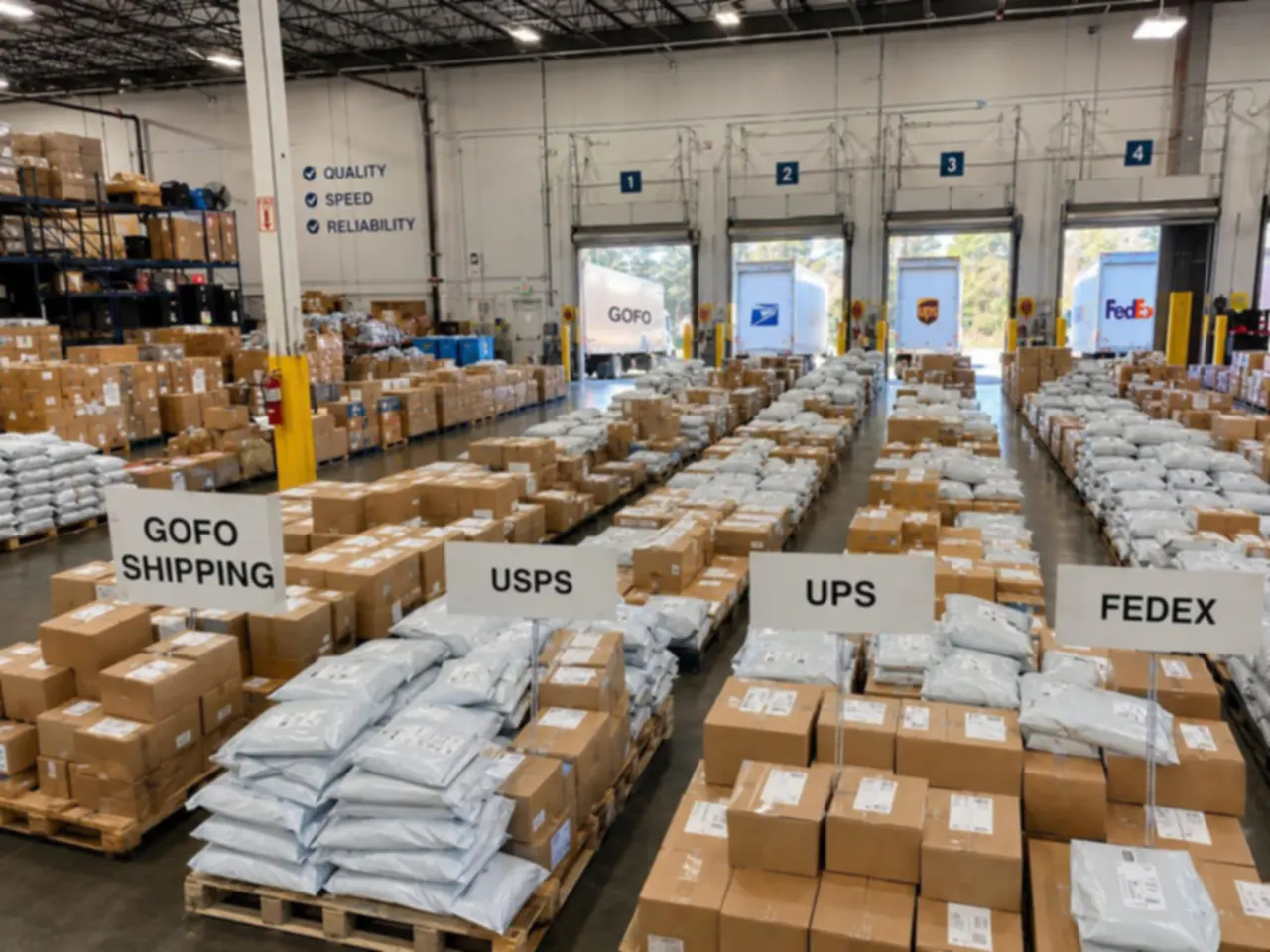
A few verified facts about the place. The warehouse processes approximately 1,000+ parcels a day. Scheduled carrier pickups run Monday through Saturday for GOFO, UPS, USPS and FedEx. We maintain up to $5 million in insurance coverage for qualifying warehouse operations, subject to policy terms, limits and exclusions (confirm coverage before you ship, it isn't automatic). And the team picks up the phone, email or WhatsApp Monday through Saturday, 10 AM to 4 PM Central.
If you're local and want to see a problem with your own eyes, you can come look. Some sellers like that. Most are happy with photos.
Serving sellers in Chicago and beyond
We're in Niles, on Chicago's northwest edge. Local brands and resellers can drop off inventory for inspection directly. Everyone else ships to our dock, same as any other inbound.
Read more about working with us locally on the Chicago 3PL and prep page or our Niles, IL page. Whether your stock comes from across town or across an ocean, our product inspection services in Chicago work the same way.
Pair inspection with these services
Inspection is part of our marketplace prep center group, and it rarely runs alone. Count-ins, lot and expiry capture ($0.20 per unit) and serial number capture ($0.75 per unit) are handled through inbound receiving and inventory control. Need passed units combined into sets? Add kitting and bundling.
Not sure how deep the inspection should go? Describe the product when you request a quote and we'll suggest a level.
Inspection rates
Here's what the common inspection work costs. Every other rate is on the pricing page.
- Basic visual QC
- $0.25/unit
- Detailed inspection / grading
- $0.75-$1.50/unit
- Weight & dimension capture
- $1.50/SKU
- Unit count / carton verification
- $5/carton + $0.10/unit
- Evidence / damage photos
- First 3 free, then $1/photo
- Non-standard inspection work
- $40/hour standard labor
Run basic QC on 1,000 units and it's $250. That's often less than the cost of a handful of returns.