Key takeaways
- In-house fulfillment is never free. Your hours, your space and your mistakes all have a price, even if no invoice shows up.
- The clearest signs you've outgrown it: packing eats your selling time, inventory takes over the house, and errors creep up on busy days.
- A 3PL costs you some control and some speed of change. Decide which products actually need that control.
- Test with one SKU or one sales channel for a month or two before you move everything.
The question every growing seller hits
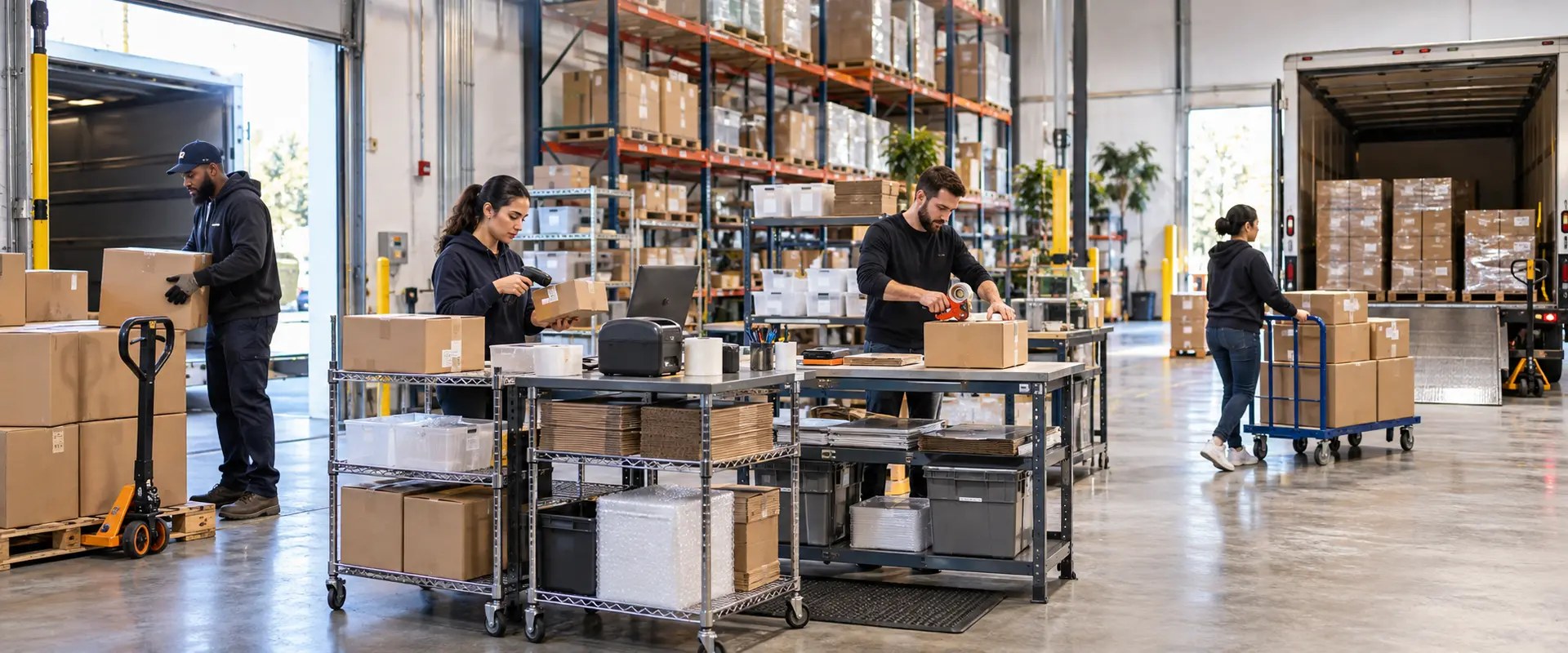
It usually starts in a garage. Or a spare bedroom, or a storage unit somewhere around Chicago with a folding table and a tape gun. Orders come in, you pack them at night, you drop them at the post office on the way to something else. Then sales grow, and the 3PL vs in-house fulfillment question stops being theoretical.
We run a prep and fulfillment warehouse in Niles, Illinois, so we're obviously not neutral here. Still, we've seen plenty of sellers move to a warehouse too early (and pay for it), and plenty who waited way too long. This guide tries to help you figure out which one you are.
What in-house fulfillment really costs
When sellers weigh 3PL vs in-house fulfillment, most compare a 3PL quote against zero. That's the mistake. Packing your own orders has costs; they're just spread out and easy to ignore.
- Space: the garage, the second bedroom, or the storage unit you rent. If it's at home, that's space your family isn't using.
- Supplies: boxes, mailers, tape, labels, void fill, a label printer and a scale. You buy them at small-quantity prices.
- Time: picking, packing, printing labels, answering "where's my order" emails, and counting stock when the numbers don't match.
- Carrier trips: driving to drop-off points or planning your day around a pickup window.
- Mistakes: wrong item, wrong size, a missed order on a busy weekend. Each one means a reship, a refund or a bad review.
Let's do some purely hypothetical math. Say you ship 300 orders a month and each one takes you about six minutes from pick to sealed box. That's around 30 hours a month. Now ask what those 30 hours are worth to you. If you'd value your time at even a modest hourly figure, the number gets real fast, and that's before supplies, space or any reships.
None of this means in-house is wrong. At low volume, with products that need a personal touch, it can be the smartest setup there is. Just count it honestly.
What a 3PL takes over
A third-party logistics warehouse handles the physical side of the business. Your inventory lives there instead of at home. When an order comes in, the team picks it, packs it, labels it and hands it to the carrier. Typical 3PL warehouse services cover receiving, storage, pick and pack, marketplace prep, returns and freight.
Here's what that looks like with real numbers, using our own posted rates as one example (other warehouses price differently, so compare). For ecommerce fulfillment, we charge $2.75 for the first item per order at 1 to 250 orders a month, and $2.35 at 251 to 500. Each additional item in the same order is $0.50. A standard pallet up to 72 inches is $35 a month in storage, and smaller stock can sit in a box or bin at $4 to $6 a month.
Back to that hypothetical 300 orders a month, one item each, with two pallets of stock. That works out to roughly $705 in order fees plus $70 in storage. Postage is on top, and you should confirm what packaging materials are included in any quote you get. Compare that against your own 30 hours, your supplies and your space. Sometimes the warehouse wins easily. Sometimes it doesn't, yet.
If you want the longer breakdown of fee types, we wrote up how much a 3PL charges and what each line on a quote means.
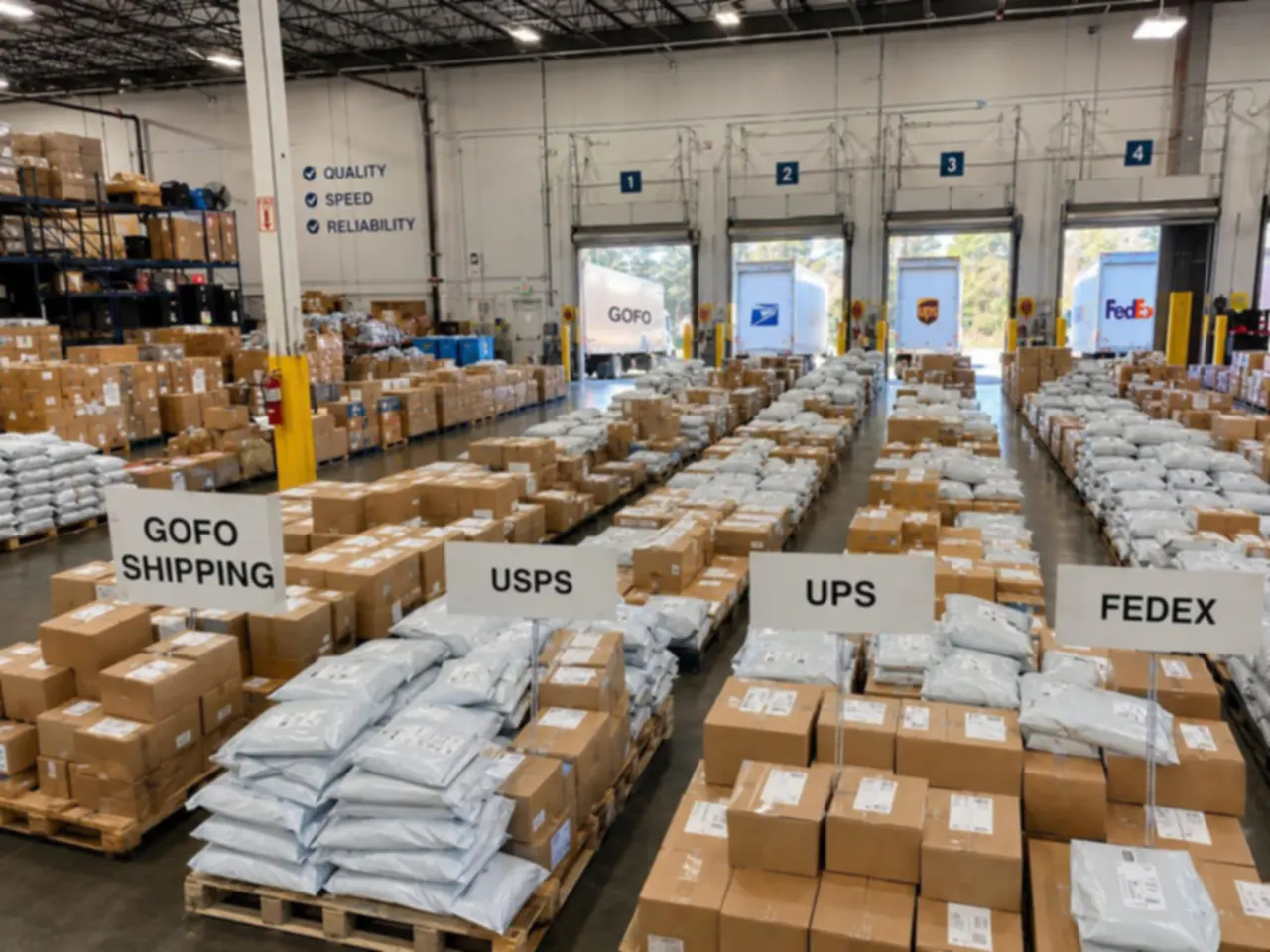
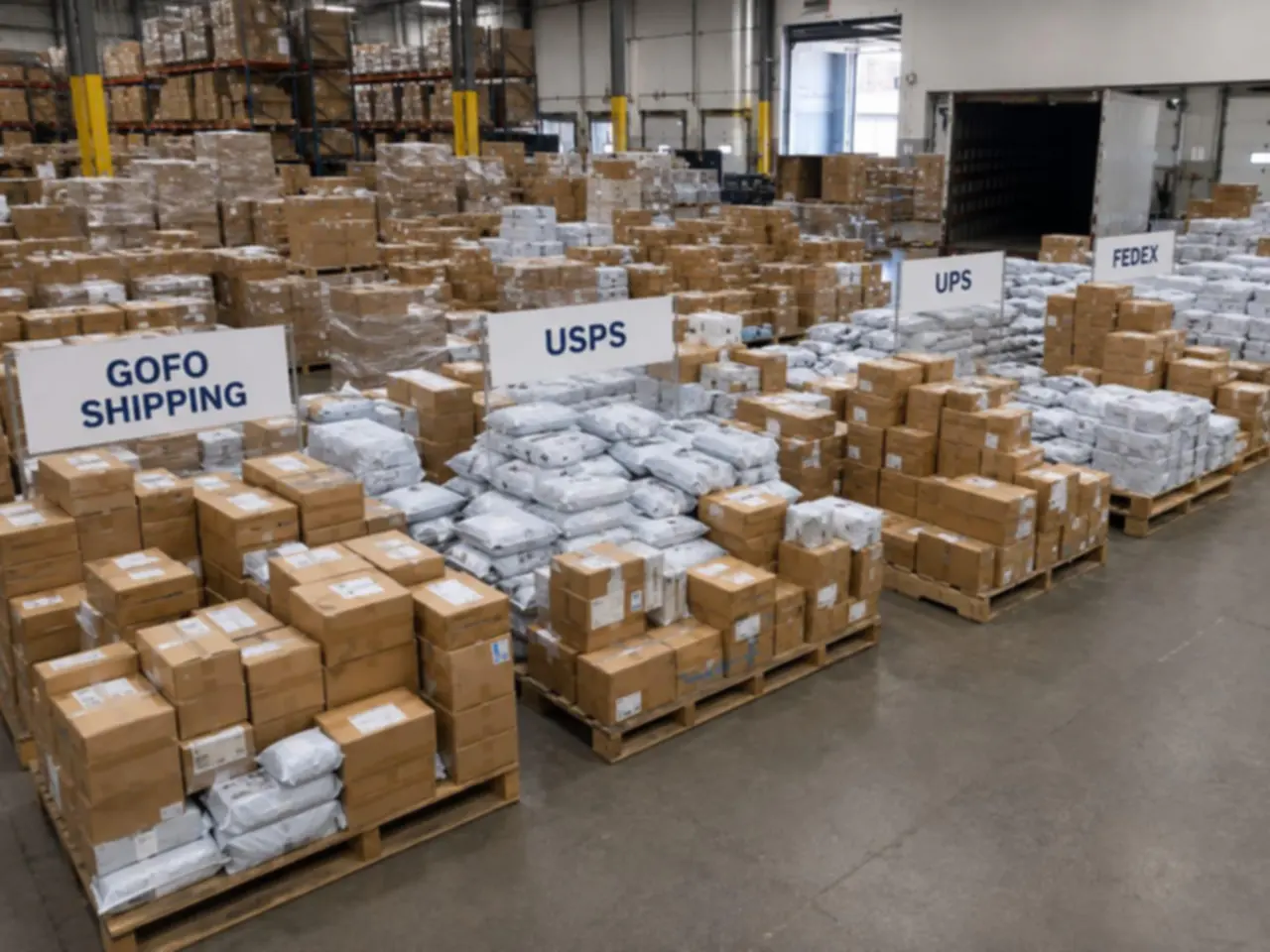
Carriers are part of it too. We have scheduled pickups Monday through Saturday for GOFO, UPS, USPS and FedEx, so nobody's driving boxes anywhere at 5 p.m.
Signs you've outgrown in-house fulfillment
There's no magic order count. But some patterns show up again and again, and they're a decent guide for when to use a 3PL.
Packing is eating your selling time
If you spend more hours taping boxes than sourcing products, running ads or talking to wholesale buyers, the business is paying you to do its cheapest job.
The inventory has taken over
Cartons in the hallway. A pallet you can't get into the garage. Stock you can't find because it's behind other stock. That's usually the point where space starts costing you sales.
Errors go up when orders go up
Busy weeks are when mistakes happen at home. A warehouse that ships around 1,000+ parcels a day is set up for volume in a way a kitchen table just isn't.
You're selling on more than one channel
Shopify plus Amazon plus TikTok Shop from one garage gets messy. Separate stock counts, different packing rules, different labels. That's often what tips sellers toward outsourcing fulfillment.
What you give up with a 3PL
Let's be straight about the downsides, because they're real.
Control. You can't walk over and repack a box exactly how you like it. Custom touches (a handwritten note, a specific folding style) need to be written into the work order, and some may cost extra. We charge $0.20 an order for a client-supplied insert and $0.30 for a printed gift note or packing slip, for example.
Speed of changes. At home, you can switch mailers tomorrow. With a warehouse, changes go through instructions, get confirmed, and then roll out. That's slower, though it's also why the work stays consistent.
Inventory access. Need a few units for a photo shoot or a pop-up? You'll request them instead of grabbing them off a shelf.
Onboarding. A legitimate warehouse will want to verify your business before it accepts inventory. Ours asks for a legal company name, business address, EIN or registration, an authorized U.S.-based signer and a valid photo ID. It takes a bit of time, and it protects everyone.
The hybrid option: 3PL vs in-house fulfillment isn't all or nothing
Plenty of sellers split it. Fast movers and standard products go to the warehouse. Custom, made-to-order or fragile hand-finished items stay at home where you control every detail.
Another common split is by channel. Marketplace orders ship from the warehouse, while a small batch of wholesale samples or local orders stays with you. Or you keep a working stock at home and use 3PL warehousing for the overflow pallets, pulling inventory forward as you need it.
Hybrid setups need one thing above all: clean inventory counts in both places. Decide early which location is the source of truth for each SKU, or you'll oversell.
How to test a 3PL before you commit
You don't need to move everything on day one. A small test tells you most of what you need to know.
- 01
Pick one SKU or one channel
Choose a steady seller with simple packing, or route one sales channel's orders to the warehouse. Keep everything else in-house.
- 02
Write the work order carefully
Packaging, inserts, carrier choices and how you'll share orders with the team. The order handoff method is confirmed during onboarding.
- 03
Send a modest amount of stock
Enough for a month or two of orders. Watch how receiving goes and whether the counts match what you sent.
- 04
Track the boring stuff
Ship times, errors, how fast questions get answered, and what the invoice actually looks like versus the quote.
- 05
Decide with real data
If the test went well, add SKUs in batches. If it didn't, you've lost very little.
Before the test, it helps to shortlist carefully. Our guide on how to choose a 3PL has the questions we'd ask any warehouse, us included.
Where a local warehouse fits
If your stock is already around Chicago, a nearby warehouse has a practical upside: you can visit, drop off inventory yourself and see the floor before you trust it with orders. That's one reason sellers look for a Chicago 3PL rather than a warehouse across the country.
We're at 5673 W Howard St in Niles, open Monday through Saturday, 10 a.m. to 4 p.m. Central. We also cover sellers across the state through our 3PL services in Illinois. If you want to run the numbers on your own order profile, send us your volume, SKUs and channels through the quote form and we'll show you what the switch would actually cost.