Key takeaways
- It's time to outsource when packing eats the hours you should spend on marketing, product or customers.
- Prepare a clean SKU list, barcodes, packaging specs and your inserts before the first box ships.
- Run a short overlap period: keep a little stock at home while the warehouse handles the bulk of orders.
- At Treasure World, pick and pack starts at $2.75 for the first item per order, plus $0.50 per extra item.
So you want to outsource Shopify fulfillment
Most store owners don't decide to outsource Shopify fulfillment on a calm Tuesday. It happens after a weekend spent taping boxes, or a sale that went better than expected and left 400 orders sitting in the queue. Fair enough. That's usually the moment it clicks.
We run a prep and fulfillment warehouse in Niles, Illinois, just outside Chicago, and a good chunk of what we pack goes out for Shopify sellers. This guide is the practical version: what to get ready, how the handoff works, and what to watch in the first few weeks. No hype, just the stuff that makes the switch go smoothly (or doesn't, when it's skipped).
Signs it's time to hand off the packing
There's no magic order count. But a few patterns show up again and again:
- You (or your one helper) spend more hours packing than selling.
- Inventory is spread across a garage, a spare room and a storage unit.
- Orders ship late after every promotion, and reviews start to mention it.
- You're selling on more than one channel and counting stock by hand.
- You want to take a week off and literally can't.
If two or three of those sound familiar, outsourcing is worth pricing out. If none do, honestly, keep packing yourself for now. In-house works fine at low volume, and you'll learn things about your product that help later.
What to prepare before you send anything
The smoothest launches we see are the ones where the seller shows up organized. The warehouse can only pack what it can identify, so most of the prep work is about making every unit easy to recognize.
Your SKU list
One row per sellable item: SKU, product name, variant (size, color), barcode, unit weight and dimensions. Make sure the SKUs match what's in your store exactly. A shirt called "TEE-BLK-M" on Shopify and "Black Tee Medium" on the packing list causes confusion nobody needs.
Barcodes on every unit
UPC, EAN or your own SKU barcode, whatever you use, just be consistent. Units without scannable labels slow receiving and raise the chance of a wrong item going out.
Packaging specs and inserts
Decide what each order ships in: poly mailer, plain box, branded box, tissue, filler. Write it down per SKU or per order type. If you use thank-you cards, discount cards or branded boxes, ship them in with your first inventory and say so on the paperwork. If you sell bundles (a gift set, a 3-pack), ask about kitting and bundling so the sets are built ahead of time instead of during every order.
How Shopify orders reach the warehouse
This is the question we get most, and the honest answer is: it depends on the warehouse. Some 3PLs work through apps, some through file exports, some through other methods. At Treasure World, the order handoff method is confirmed during onboarding, based on your volume and how you already run your store. We don't promise an app or automatic sync in this post, and you should get any 3PL's method in writing before you commit.
Whatever the method, a few things matter for clean Shopify order fulfillment:
- Every order arrives with the correct SKU, quantity and full shipping address.
- There's a clear daily cutoff for orders that ship the same day.
- You know who buys the shipping labels and how tracking numbers get back to you.
- Special requests (gift notes, address changes, cancellations) have one agreed route.
One rule on our side worth knowing: shipping labels have to be legally purchased and valid. Reused or counterfeit labels are prohibited, full stop.
Receiving your first shipment
Before any boxes move, onboarding needs to be done. We verify U.S. company details (legal name, address, EIN or registration, an authorized U.S.-based signer and photo ID), and we ask that you don't ship inventory until onboarding is approved and inbound instructions are confirmed. It's a little paperwork up front, and it protects everyone in the building.
Then the stock arrives. Cartons and pallets are checked in, counted against what you said was coming, and put away by SKU. Our inbound receiving and inventory control page explains what happens at the dock, and our post on how to send inventory to a prep center covers labeling, packing lists and the mistakes that cause delays. Short version: label every carton, list what's inside, and send a heads-up before it ships.
Packaging and the unboxing moment
For a lot of Shopify brands, the box is part of the product. That's fine. A 3PL can pack into your branded boxes, add a card, include a packing slip or a gift note. Each of those is a small extra touch per order, so pick the ones your customers actually notice.
Our advice? Start simple. Branded box plus one insert is plenty for most stores. You can always add tissue and stickers later once you see how the per-order cost lands.
Shipping speed and carrier pickups
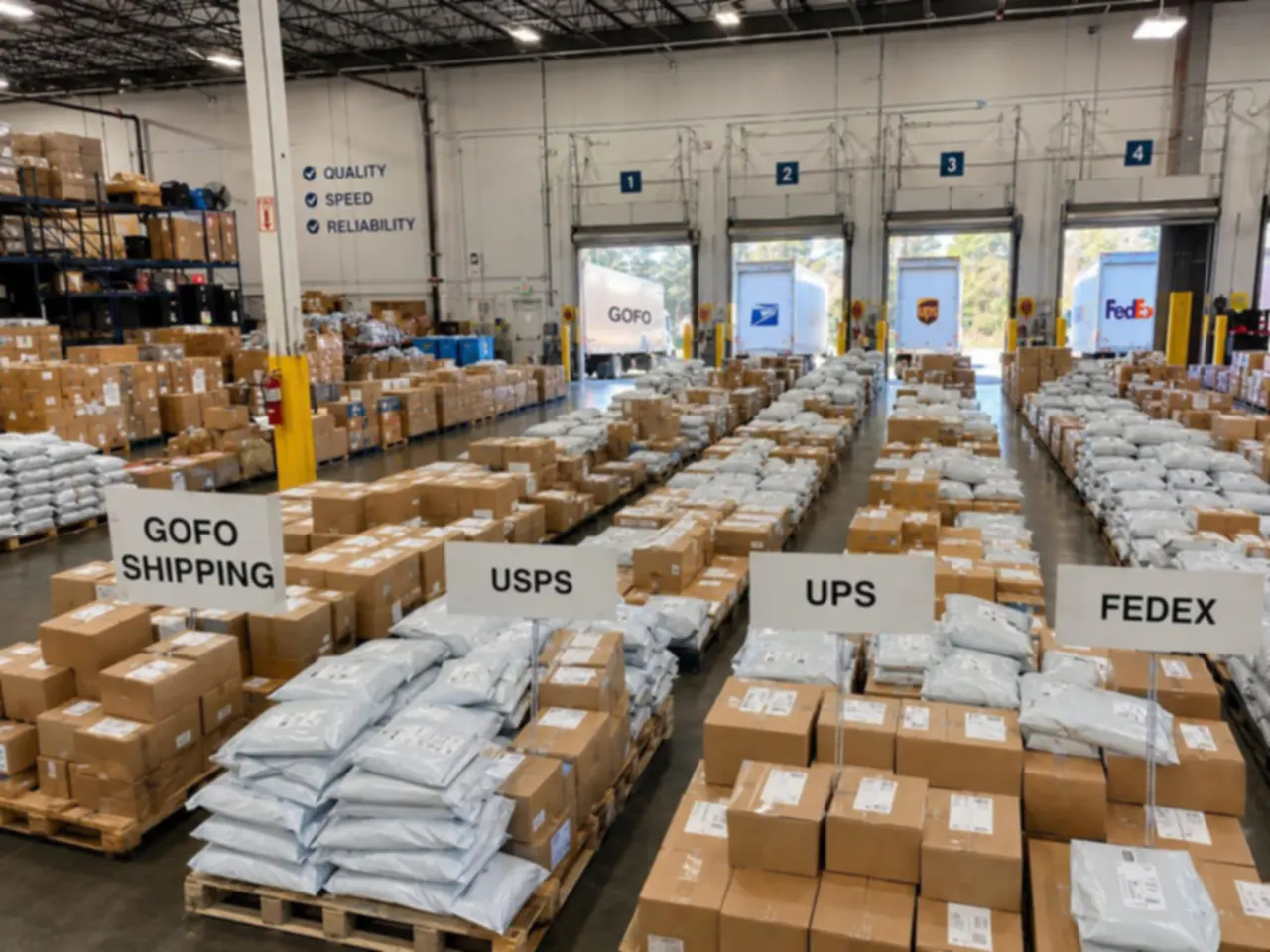
Shopify shipping promises live or die on how fast orders leave the building. We have scheduled carrier pickups Monday through Saturday for GOFO, UPS, USPS and FedEx, and same-day fulfillment is available for qualifying orders (capacity is confirmed based on your order profile). We process approximately 1,000+ parcels a day.
Being near Chicago helps too. A central Midwest location can shorten transit to a big share of the country compared with shipping everything from one coast, though actual transit times always depend on the carrier and service you choose. If your customers lean Midwest, our Chicago fulfillment page has more on the area we serve.
Don't forget returns
Returns are where outsourcing gets messy if nobody plans for them. Decide up front: where do customers send returns, who inspects them, and what happens next (restock, repackage, or set aside)? We handle that through our returns, removals and refurbishment service, where items are received, scanned and checked before anything goes back into sellable stock.
A sensible plan to outsource Shopify fulfillment
Here's the switch-over we'd suggest for most stores. It avoids the classic mistake of moving everything on day one and finding a problem on day two.
- 01
Share your requirements
Products, order volume, packaging, inserts, channels. The more specific, the better the quote.
- 02
Confirm the work order
Handling, packaging, storage and order handoff are defined before inventory is sent.
- 03
Send a first batch
Ship your top sellers first, not your whole catalog. Keep a little stock at home as a backup.
- 04
Run both for a week or two
Let the warehouse take most orders while you watch accuracy, packing and tracking updates.
- 05
Move the rest
Once the first batch runs clean, send the remaining SKUs and stop packing at home.
Try not to switch in the weeks right before your busiest season. Give yourself a quiet stretch to work out the kinks.
What it costs (with real numbers)
We can't tell you what every warehouse charges, but we can show you ours. These are from our posted rates for direct-to-consumer orders:
- First item, 1-250 orders/month
- $2.75 per order
- First item, 251-500 orders/month
- $2.35 per order
- Additional item in same order
- $0.50 per item
- Branded insert (client-supplied)
- $0.20 per order
- Custom branded packaging
- $0.50 handling + materials
- Carton receiving
- $1.00 per carton
- Box or bin storage
- $4-$6 per month
Say you ship 200 orders a month, half of them with a second item, and every order gets a thank-you card. That's 200 x $2.75 ($550), plus 100 extra items at $0.50 ($50), plus 200 inserts at $0.20 ($40). Around $640 in handling before postage, storage and receiving. Your numbers will differ, which is why the full list lives on our pricing page.
If you want to see how it all fits together, our page on Shopify fulfillment in Chicago lays out the service, and you can ask us any question before you commit to a Shopify warehouse at all.