3PL warehousing in Chicago, for the gap between the truck and the sale
There's a stretch of time most sellers never plan for. The freight has left the supplier, but it isn't on a shelf at Amazon or in a customer's mailbox yet. It's just... somewhere. Our 3PL warehousing in Chicago covers that stretch: receiving what shows up, storing what needs to wait, and moving what needs to keep going. All of it happens at one building, 5673 W Howard St in Niles, Illinois.
We call this group Storage & Movement. It's less glamorous than prep or fulfillment, honestly. Nobody posts about a well-counted pallet. But when inbound goes sideways (short cartons, a container nobody scheduled, 14 pallets with no labels), every step after it goes sideways too.
So this page is the overview. It explains the three services in this group, how they hand off to each other, and how they feed the prep and fulfillment work most of our accounts actually came here for.
Warehouse Storage
Box, bin, pallet, cubic-foot and container storage in Niles, with posted monthly rates and a buffer for FBA replenishment and order fulfillment.
Learn moreInbound Receiving
Carton and pallet receiving, unit counts, lot, expiry and serial capture, SKU sorting and cycle counts, so you know exactly what landed in the warehouse.
Learn moreForwarding & Cross-Dock
Box forwarding, pallet cross-docking, 20 and 40 ft container unloads, SKU sorting, palletization and freight paperwork from our Niles warehouse.
Learn moreThree services, one flow of inventory
Inventory in this part of the building is doing one of three things. It's arriving, it's waiting, or it's passing through. Each one has its own page with the full details and rates.
Arriving: receiving and inventory control
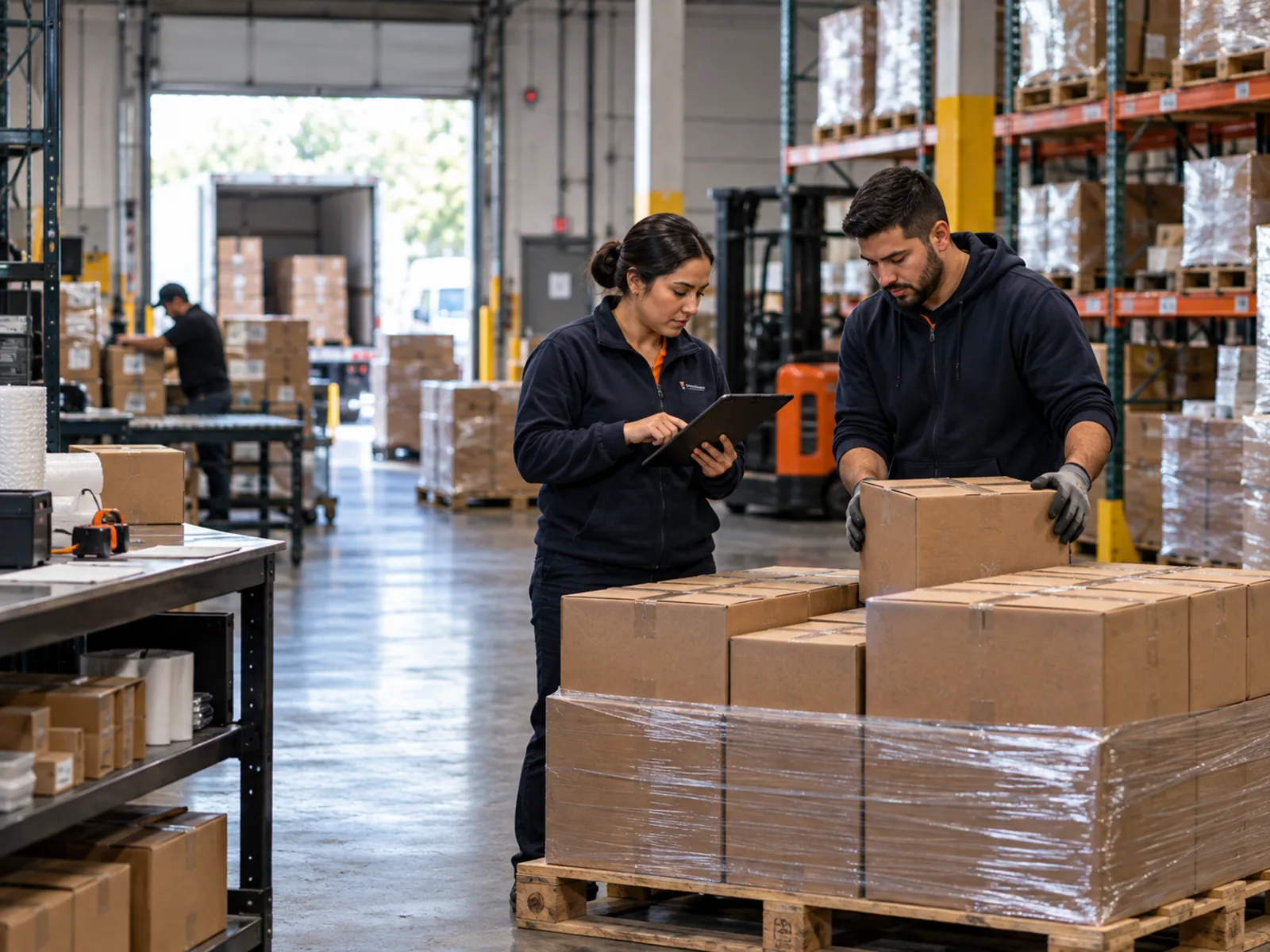
Every box and pallet gets checked in before anything else happens to it. Standard cartons get counted in, pallets get logged, and anything weird (a missing ASN, mixed SKUs in one carton, a crushed corner) gets flagged instead of quietly shelved. If you need more than a count, we can record lot codes, expiration dates or serial numbers. Read more on inbound receiving and inventory control.
Waiting: warehouse storage
Some inventory sits. Maybe you're holding back FBA replenishment so you don't pay a marketplace's storage fees, or maybe a supplier gave you a good price on a full container and you need somewhere to put it. We store by the box or bin, by the pallet, by the cubic foot for awkward oversize items, and by the container. The details are on our warehouse storage page, including the aged-inventory rates (yes, we explain why those exist).
Passing through: forwarding, cross-docking and container unloads
Then there's freight that barely stops. Boxes that come in from a supplier and go right back out to an FBA warehouse. Pallets that need a quick stage and a new BOL. A 40-foot container that has to be unloaded, sorted by SKU and built onto pallets. That's all on the freight forwarding and cross-docking page.
How storage connects to prep and fulfillment
Here's the part people miss. Storage and movement aren't a separate business from prep and fulfillment. They're the front door to it.
Say you import 3,000 units of a private-label product. The container gets unloaded and sorted. Most of it goes onto pallets in storage. Every couple of weeks, a few hundred units come down, go through FBA prep (labels, poly bags, carton build) and ship out to Amazon. Meanwhile, a smaller batch sits on a shelf for your Shopify orders, which our ecommerce fulfillment team picks and packs as they come in.
Same inventory. Three or four different services touching it. And because it never leaves the building between steps, there's no second freight bill and no second receiving count at another warehouse.
The same logic works for wholesale. Cases come in, sit on a pallet, and go back out as B2B and wholesale orders with retail carton labels. Or for sellers whose real headache is marketplace prep, storage just becomes the waiting room between batches.
Returns can join in too. Units that come back get handled under returns and recovery work, and the sellable ones go back into stock in the same building.
What happens from the first email to the outbound truck
Storage and freight work goes wrong mostly at the start, when nobody agreed on what was coming or where it was going. So the process looks like this:
- 01
Tell us what's coming
Product type, how many cartons or pallets, whether it's a container, and roughly how long it'll stay. If it's a floor-loaded container, say so. That changes the unload plan.
- 02
Agree on the work order
Receiving method, storage type, and the next stop for the inventory get written down before anything ships. Onboarding verification happens here too.
- 03
Send the freight
Boxes, pallets or containers arrive and get checked in against what you told us. Problems get flagged with photos, not buried.
- 04
Store it, prep it or move it on
Inventory goes to a rack, to the prep tables, or straight back out on a carrier pickup or freight truck, exactly per the work order.
A small ask. Please don't send freight before onboarding is approved and you've got inbound instructions. A surprise truck at the dock can still be received, but it's slower, it's billed as problem receiving, and it's frustrating for everyone.
Who needs warehouse logistics like this
Warehouse logistics sounds like something only big companies worry about. In practice, the sellers who need it most are often small teams who've just run out of garage.
A few common situations we see:
- Amazon sellers keeping backup stock nearby so they can send smaller, more frequent FBA shipments.
- Importers with a container on the water and no dock, no forklift and no crew to unload it.
- Wholesale suppliers who need pallets received, held and released on a schedule.
- Brands moving out of another 3PL who need everything counted on arrival, so they know what they actually have.
- Sellers who buy in bulk once or twice a year and drip the inventory out over months.
If one of those sounds like you, the next step is usually picking which piece you need first. Most people start with receiving and storage and add the rest later.
Commercial warehousing without running your own building
Leasing your own space means rent, racking, a forklift, insurance, staff, and somebody who shows up at 7 AM when the truck's early. That's a lot of fixed cost for inventory that might double one quarter and halve the next.
Commercial warehousing through a 3PL flips that. You pay for the pallets, boxes and moves you actually use. When volume drops, the bill drops. When a big order lands, the space is already there.
It's not for every business, to be fair. If you've got steady volume, your own team and a building you like, keep it. But if storage is a side problem you'd rather hand off, 3PL warehousing in Chicago is usually the cleaner way to do it, and you can start with a handful of pallets.
Why sellers trust this warehouse with their freight
Short list, all of it verifiable:
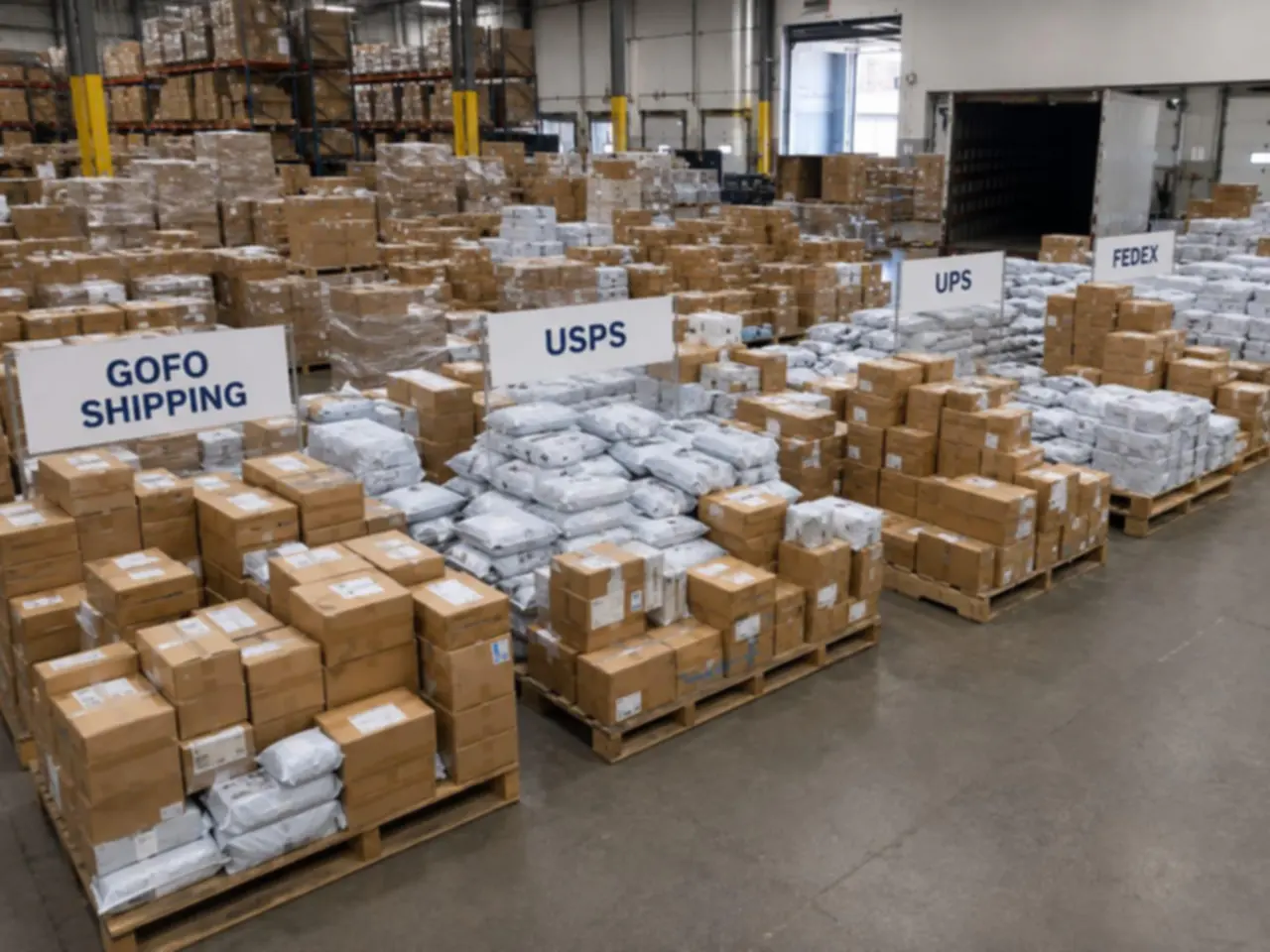
The building processes approximately 1,000+ parcels per day, so inbound and outbound volume is normal here, not an event. Scheduled carrier pickups run Monday through Saturday for GOFO, UPS, USPS and FedEx, which matters a lot when stored inventory needs to head out as parcels. We maintain up to $5 million in insurance coverage for qualifying warehouse operations. That's subject to policy terms, limits and exclusions, and coverage isn't automatic, so confirm it for your goods before you ship.
Rates are posted publicly, including storage, receiving, forwarding and container unloads. And when a pallet arrives leaning at a 20-degree angle, you can call, email or WhatsApp a real person on the team, Monday to Saturday, 10 AM to 4 PM Central.
Chicago warehousing from a base in Niles
Our warehouse sits in Niles, on the northwest edge of Chicago. For sellers in the city and suburbs, that makes Chicago warehousing practical in a hands-on way: you can drop off inventory, visit the floor, or pick something up when you need it. For sellers outside the state, 3PL warehousing in the Chicago area is simply an inbound address that trucks and parcel carriers can reach.
If you want the local detail, we've got pages on our 3PL services across Chicago and our home base for warehousing in Niles. Sellers elsewhere in the state can check the Illinois page.
Chicago storage services and movement rates at a glance
These are starting rates for our Chicago storage services and the freight work around them. Full tables live on the pricing page.
- Parcel / carton receiving
- $1.00/carton
- Pallet receiving
- $10.00/pallet
- Standard pallet up to 72 in.
- $35/month
- Standard box / bin storage
- $4-$6/month
- Box forwarding, 1-20 boxes
- $5.00/box
- Pallet forwarding / cross-dock
- $20-$25/pallet
- 20 ft palletized container unload
- $350/container
Pallet volume tiers drop the monthly rate as you grow, and freight itself is always separate from handling. Anything that can't be priced per unit (recounts, messy inbound, special projects) runs at standard labor of $40 an hour, and we tell you that before the work starts.
Before your first shipment heads our way
A couple of house rules, because they affect storage more than anything else. We don't accept chemicals or hazardous materials, canned soda, or anything illegal, stolen, counterfeit, leaking or unsafe. Liquids over 2 lb need written approval first. Dietary supplements need U.S.-based sourcing paperwork, and supplements shipped directly from overseas suppliers aren't accepted.
You'll also go through onboarding verification (legal company name, business address, EIN or registration, an authorized U.S.-based signer and photo ID). It takes a little time. It also means everyone storing inventory in the building has been checked, which is kind of the point.
When you're ready, request a storage and freight quote with your product type, carton or pallet count, and how long you expect things to stay.