Returns processing in Chicago, without the corner full of opened boxes
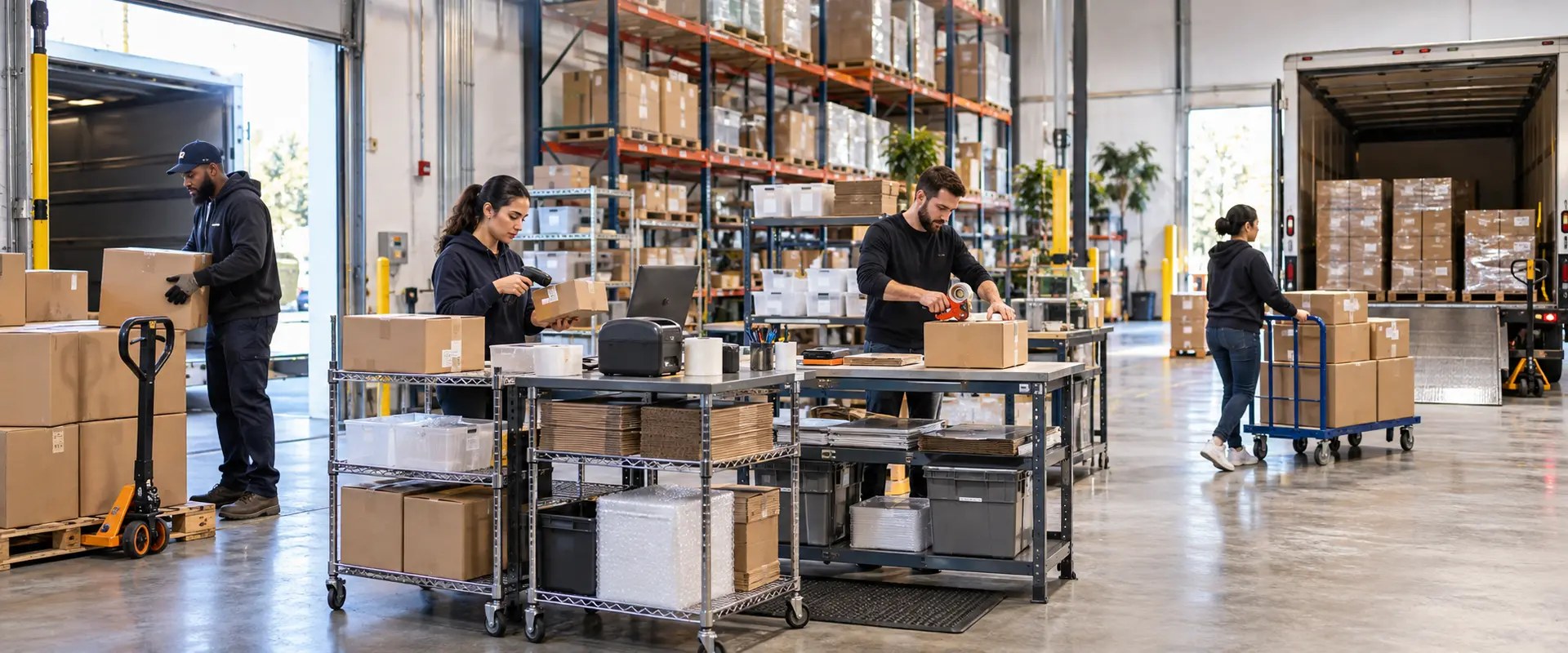
Returns are the part of selling nobody brags about. A customer sends back a blender with one scuff. Another sends back a different blender entirely. Amazon ships you 300 units from a removal order, half of them fine, some missing their packaging, a few that are clearly someone else's. Our returns processing in Chicago takes that whole mess and turns it into a list of decisions, run out of our warehouse at 5673 W Howard St in Niles.
The goal isn't just to open boxes. It's to get every unit to its best outcome as fast as reasonably possible. Sellable stock goes back into inventory. Units that need a new bag or box get one. Broken stuff gets documented and handled the way you want. And you stop paying to store returns that nobody has looked at in three months.
This page covers the returns side of our rework and recovery services: what we check, how disposition works, what removal orders look like on our end and what each step costs.
What a returned unit goes through here
Not every return needs the same attention. A sealed unit with the factory tape intact is a different job from an open box of loose parts. So there are two levels of check, and you pick which one applies to which products.
Basic receive and scan
We open the return, identify the product, scan it and do a basic condition check. Is it there? Is it the right item? Is it obviously damaged? That's $3.50 a unit, and for a lot of simple products it's all you need.
Detailed grading
For products where condition really affects value (electronics, apparel with tags, anything with parts), detailed grading documents the condition and records a disposition for each unit. It's $5.00 a unit, and restocking a sellable unit to active inventory is included in that rate. If you only need the basic check, restocking is +$1.
Simple functional testing
We can run a simple functional test on basic electronics ($5-$10 a unit), but only when you supply a safe test procedure. Plug it in, does it power on, does the button do the thing. We won't improvise a test, and we won't open anything up. If you don't have a written procedure, the team will tell you that during the quote rather than guessing.
Return photos
Proof photos follow our standard rates: the first three are free, then $1 per photo. Handy when you're filing a claim, pushing back on a customer or showing a supplier what their packaging looks like after shipping.
The disposition flow: where each return ends up
Here's the thing. Grading is only useful if it leads somewhere. Every unit we process lands in one of five places, and you set the rules up front so the team isn't calling you about every single scuffed box.
- 01
Restock
Sellable units go back into active inventory, ready for your next order or your next shipment into a marketplace.
- 02
Refurbish or repackage
Units that work fine but look rough get cleaned up, rebagged or moved into new packaging so they can sell again.
- 03
Forward
Defective or wrong items get prepped and sent back to your vendor, or forwarded to another warehouse or buyer you name.
- 04
Liquidate by your instruction
Units you'd rather sell off in bulk get set aside and held for your buyer. You arrange the sale, and we handle the physical handoff.
- 05
Dispose or recycle
Things that can't be saved get disposed of or recycled on your approval, and never anything hazardous without a proper process in place.
A simple rule set goes a long way. Something like "anything in original sealed packaging restocks, open box with all parts gets repackaged, missing parts go back to the vendor" covers most returns for most brands. Write it once, and the team follows it until you change it.
Amazon removal services and Walmart removals
When you pull inventory out of a marketplace warehouse, it has to go somewhere. Removal orders shipped to our address get received and sorted at $2.50 a unit. That covers getting them in and sorted by SKU. Detailed inspection is extra, because a lot of removal stock is fine and doesn't need it.
Removal shipments are rarely tidy, honestly. Units arrive in random cartons, sometimes several SKUs to a box, sometimes with marketplace labels stuck over the original barcode. We sort it out, count it and tell you what actually showed up versus what the removal said would show up. If there's a gap, you'll have the numbers (and photos, if you asked for them) to take back to the marketplace.
From there, most sellers want the good units sent back in. That's where our FBA prep team picks it up: fresh FNSKU labels, new poly bags where needed and a clean carton build. For Walmart, the same idea runs through WFS prep. Each marketplace sets its own rules for removals and inbound shipments, and those change, so always follow the platform's current requirements. We support the workflow; we're not a partner of Amazon, Walmart or any other marketplace.
Product refurbishment and product repackaging services
A surprising number of returns are basically new. The customer opened the box, changed their mind, taped it shut again. Sometimes the product is perfect and the packaging is the only problem.
That's where repackaging and refurbishment come in, at $3-$10 a unit depending on the labor involved (materials extra). Typical work looks like this: removing old labels and stickers, cleaning off dust and fingerprints, replacing a torn poly bag, swapping a crushed retail box for a new one you've supplied, re-inserting manuals or accessories, and relabeling the unit so it can be scanned as sellable stock.
Product refurbishment here is mostly cosmetic and packaging work: cleaning, re-bagging, new boxes, fresh labels. Anything beyond that (electrical repair, swapping parts) is a conversation to have with the team before you assume it's covered. If a unit doesn't work, it gets flagged and goes down whatever path you've chosen for defects.
For bigger batches where the job is mainly moving good units into new sellable packaging, our kitting and repackaging services may price out better per unit. The team will tell you which way is cheaper for your volume.
Who sends us returns (and why)
Mostly sellers who hit a tipping point. Returns used to be a few a week, manageable at the kitchen table. Then a product took off, the return rate followed, and suddenly there's a backlog.
- Shopify and DTC brands that want customer returns shipped somewhere other than the founder's apartment.
- Amazon sellers clearing out stranded, aged or unfulfillable inventory with removal orders.
- Walmart sellers doing the same with WFS removals.
- Resellers who buy return lots and need them graded and sorted before relisting.
- Brands that want proper returns management with a written disposition rule instead of a pile and a guess.
If that sounds like you, the fix usually isn't complicated. It's just a matter of having a building, a process and people who'll open the boxes.
Why run reverse logistics through this warehouse
Reverse logistics sounds fancy. In practice, it's stuff coming back and somebody deciding what to do with it. The value comes from doing that close to where your other inventory lives.
If your stock is already with us for storage or fulfillment, a restocked return can go back into the same pool and ship in the next order. No extra freight, no transfer. If you're not storing with us yet, warehouse storage starts at $4-$6 a month for a standard box or bin, so graded units can sit here until they're needed.
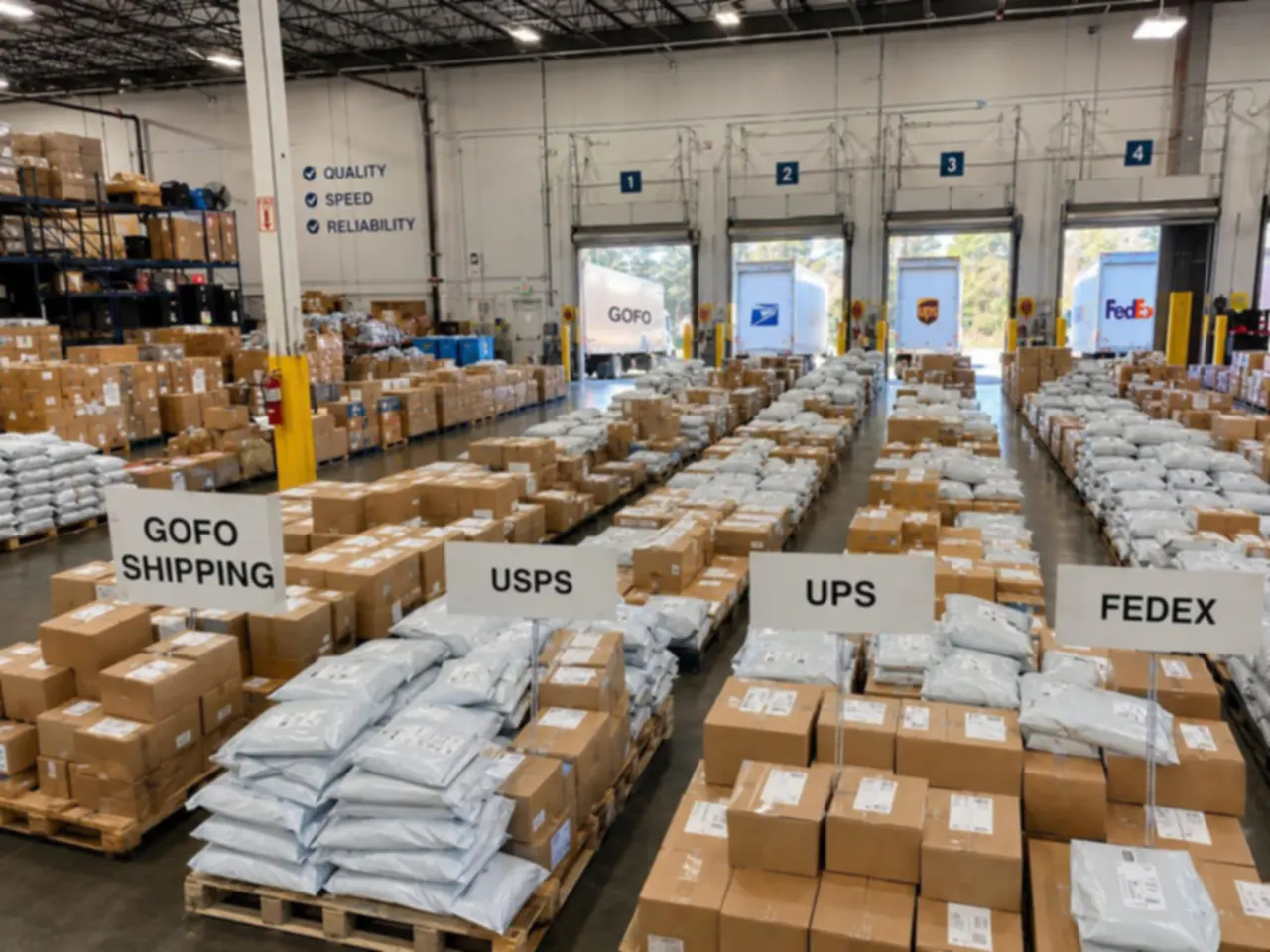
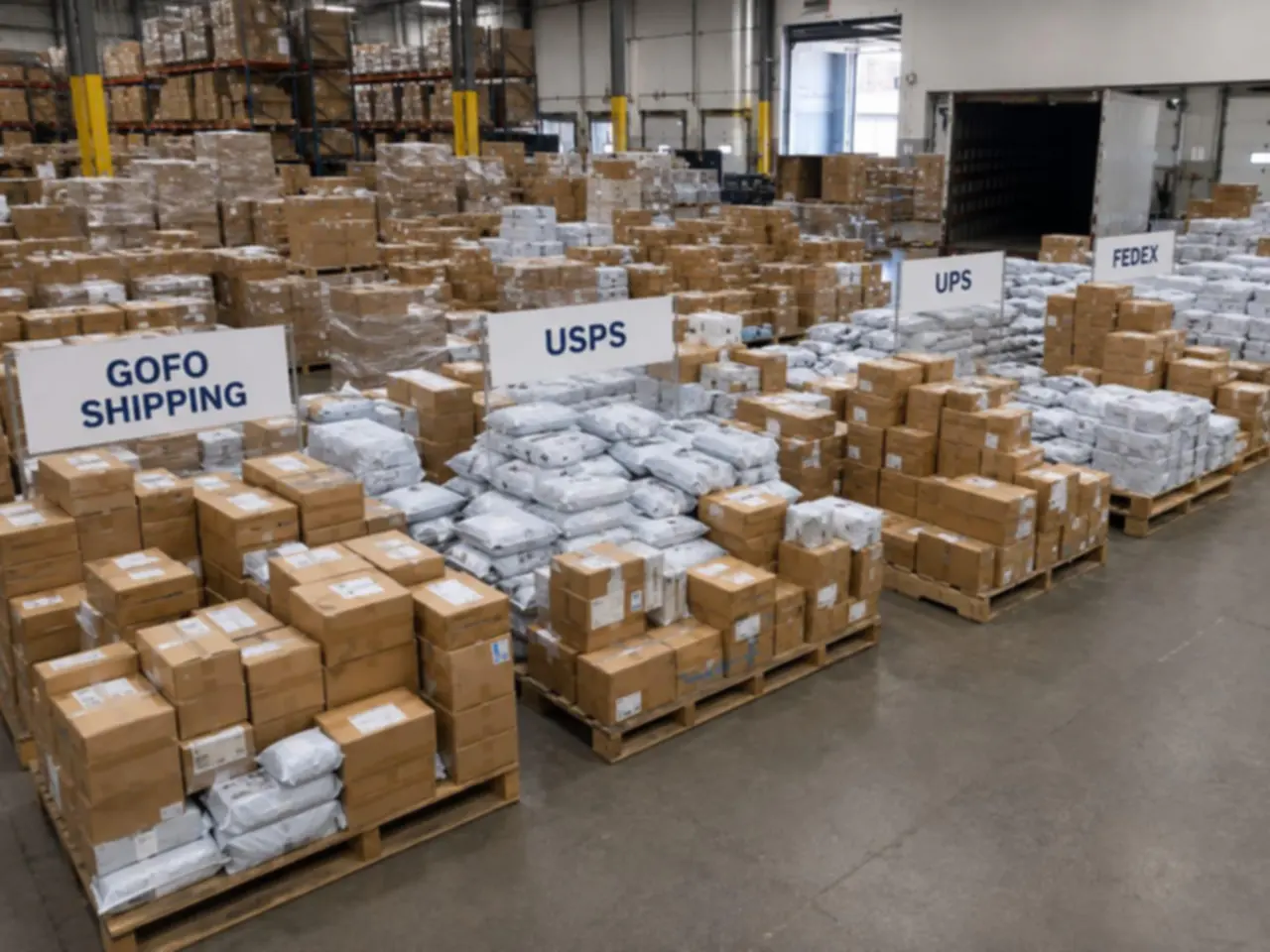
The building processes approximately 1,000+ parcels a day, so a few hundred returns don't throw off the schedule. Carrier pickups run Monday through Saturday for GOFO, UPS, USPS and FedEx, which helps when units are heading back to a vendor or out to a buyer. Return-to-vendor forwarding is $3.50 a unit plus postage, and you'll need to supply or approve the shipping label.
And if a careful look is needed before any of it moves, inspection and quality control can add measurements or defect checklists on top of the grading.
Returns help for Chicago sellers and everyone else
We're in Niles, just outside Chicago's northwest edge, so local sellers can drop off a car full of returns instead of shipping them. Our Chicago 3PL page and our Niles location page cover what working with a nearby warehouse looks like.
Most returns, though, never come from down the street. Customers and marketplaces ship them straight to our address, and you get the results without touching a box. Either way works. The team is around Monday through Saturday, 10 AM to 4 PM Central, by phone, email or WhatsApp.
If returns processing in Chicago is just one piece of a bigger cleanup (old stock to rework, labels to fix, a recall to run), take a look at the full Recovery & Projects category too.
Returns and removal rates
Everything below is per unit unless noted. The complete rate table is on our pricing page.
- Basic return receive + scan
- $3.50/unit
- Detailed grading / inspection
- $5.00/unit
- Return restock (sellable)
- Included in detailed rate or +$1
- Repackaging / refurbishment
- $3-$10/unit (materials extra)
- Functional test, simple electronics
- $5-$10/unit (safe test procedure supplied)
- Amazon/Walmart removal processing
- $2.50/unit
- Disposal / recycling
- $1.00/unit + actual disposal cost
- Return-to-vendor forwarding
- $3.50/unit + postage
Not sure which level of check your products need? Send a list of SKUs and a rough monthly return count through the quote form, and the team will recommend a setup.