Inventory receiving services in Chicago, done before anything else
Every problem a seller ever has with a warehouse can usually be traced back to the dock. A carton counted twice. A pallet logged under the wrong SKU. A short shipment nobody noticed until FBA flagged it three weeks later. Our inventory receiving services in Chicago exist so that the first touch is the careful one.
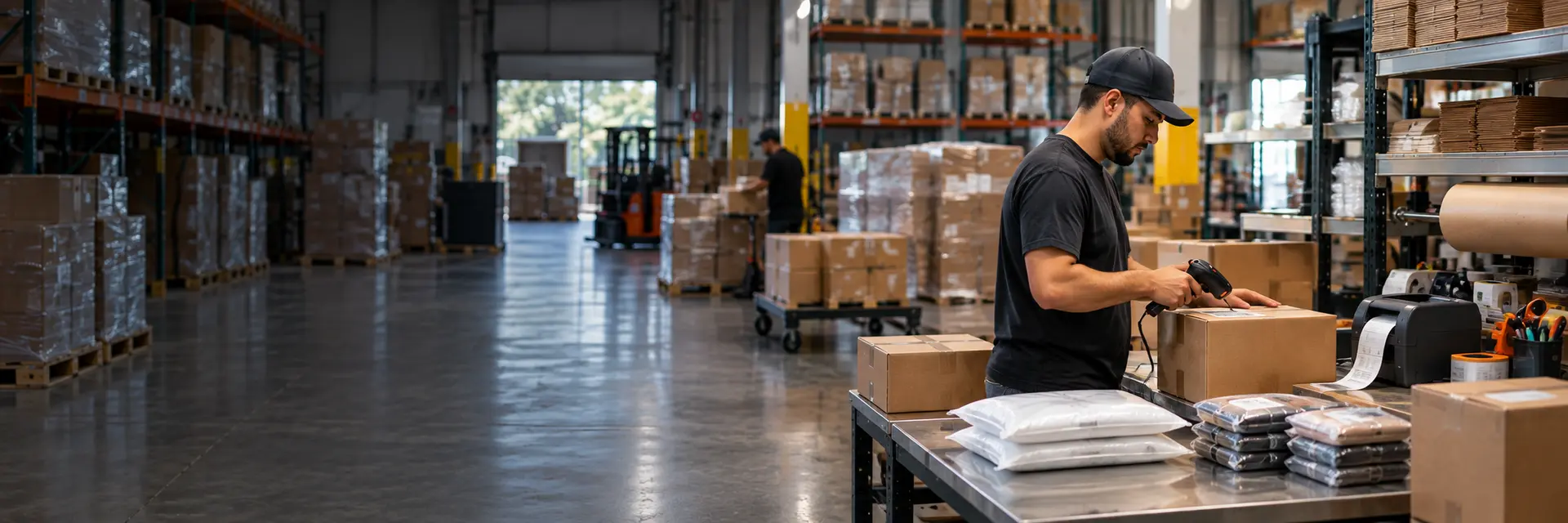
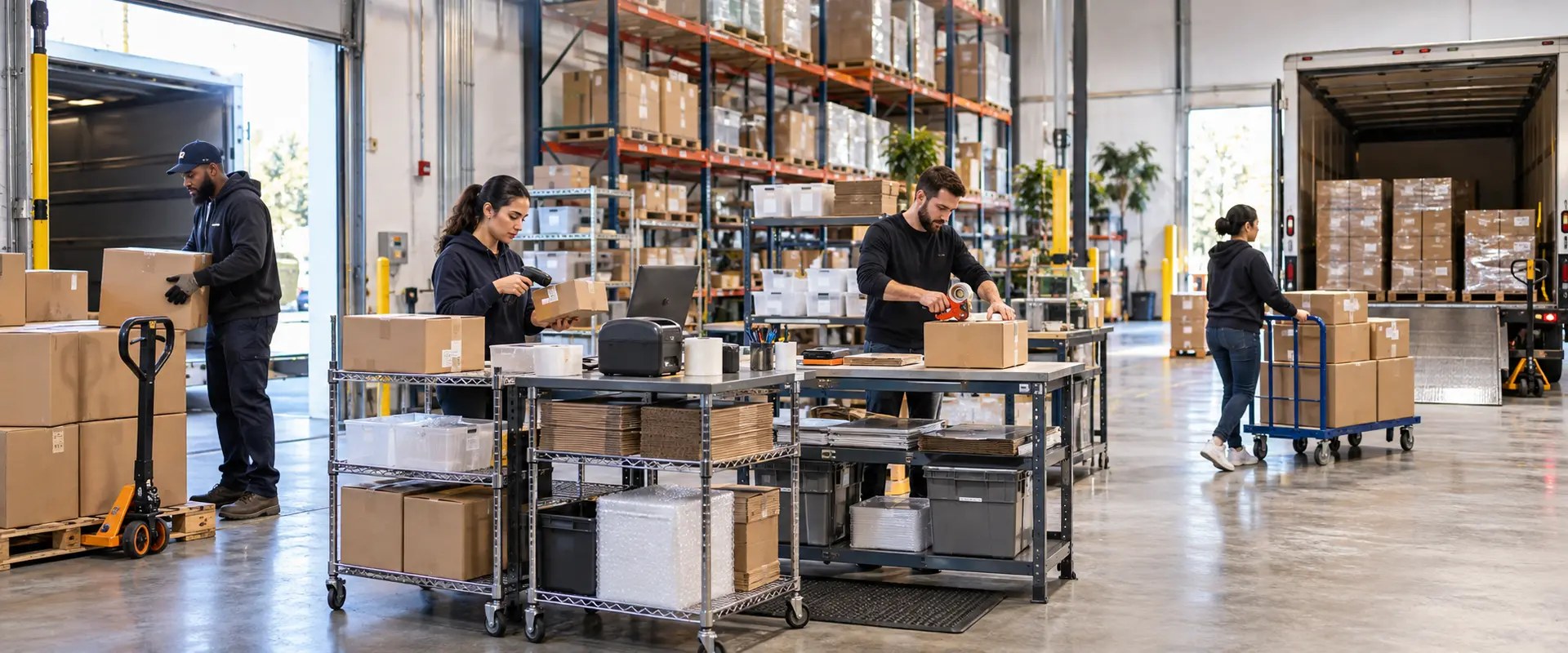
When freight arrives at our warehouse in Niles, Illinois, it gets checked against what you told us to expect. Cartons are counted in, pallets are logged, damage gets photographed, and anything that doesn't match gets flagged to you. Not fixed quietly. Not shelved and forgotten. Flagged.
From there, inventory heads wherever the work order says: into storage, onto the prep tables, or into the fulfillment area. But it only goes there once we know what it is and how much of it there is.
What warehouse receiving includes (and what costs extra)
Standard warehouse receiving is simple on purpose. A properly labeled carton gets a basic count-in for $1.00. A standard palletized inbound is $10.00 per pallet. That covers checking it in against your expected shipment and logging it so it can be found again.
Plenty of sellers need more than that, though. Here's what's available on top:
- Unit count and carton verification: $5 per carton plus $0.10 per unit, for an exact each-count when you need to know the carton really holds 48, not 46.
- Lot, batch or expiry capture: $0.20 per unit to record the lot code or expiration date.
- Serial number capture: $0.75 per unit to scan or record unique serials.
- SKU sorting and segregation: $0.20 per unit to sort mixed inventory into sellable SKUs.
- Weight and dimension capture: $1.50 per SKU, from one verified sample.
- Custom inventory report: $25 per report, for a non-standard manual report you ask for.
You don't need all of these. Most accounts use one or two, usually unit counts on the first shipment from a new supplier and lot or expiry capture for anything with a date on it.
When inbound goes wrong: problem receiving
Here's the thing. A clean inbound takes minutes. A messy one can take hours, and somebody has to pay for those hours.
Unscheduled or problem receiving is billed at standard labor, $40 an hour. That covers the stuff that breaks the normal flow:
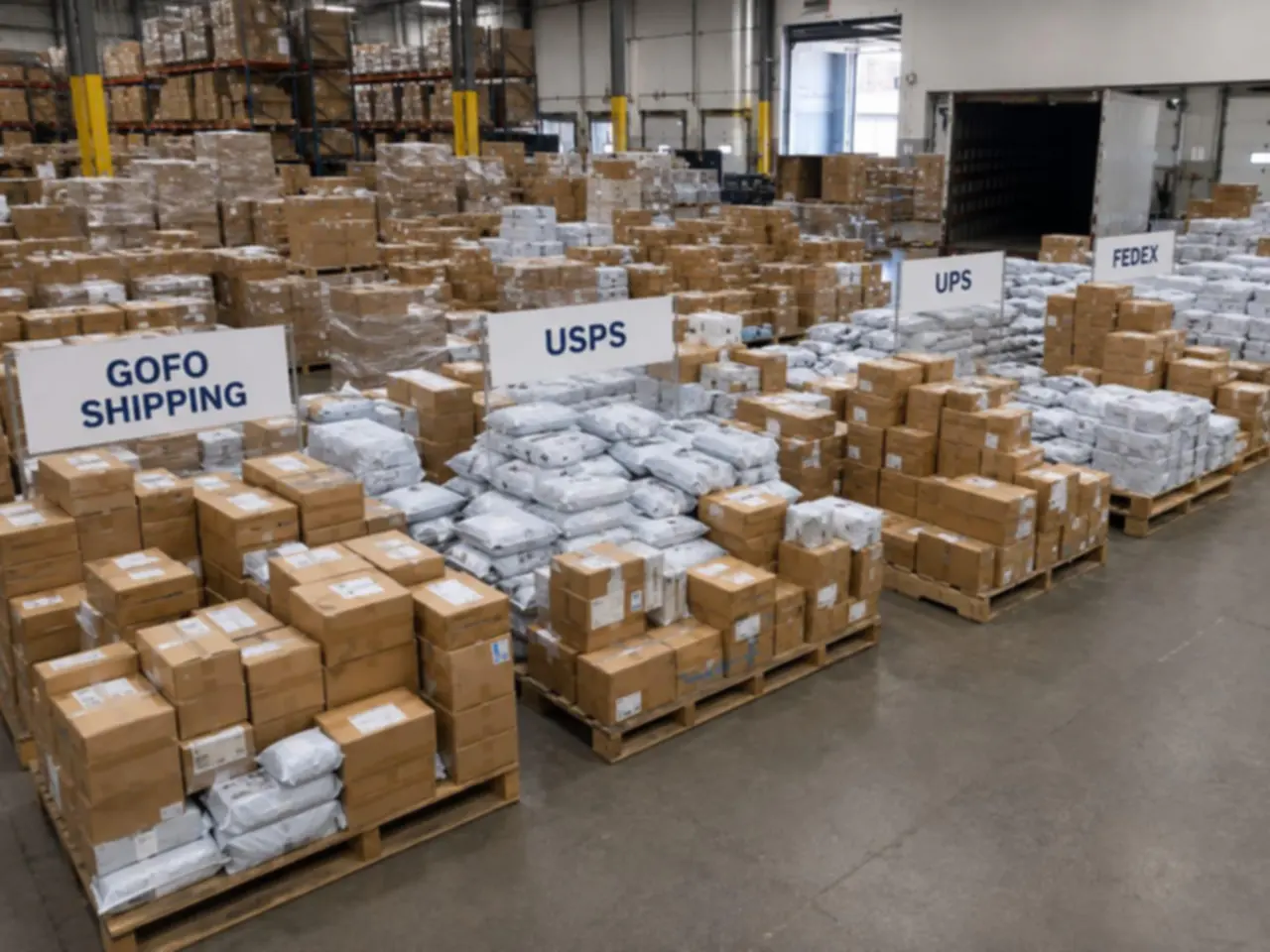
Freight that shows up with no ASN or advance notice. Cartons with three different SKUs packed together and no labels. Pallets that arrive damaged and need to be broken down, photographed and recounted. Boxes with no labels at all, where someone has to open each one and figure out what's inside. Recounts when the numbers don't add up.
We'd honestly rather not bill any of it. The easiest way to avoid it is to send your inbound details before the freight ships, put a SKU label on every carton, and keep one SKU per carton when you can. Evidence photos for damage or discrepancies are free for the first 3, then $1 each.
How a shipment gets received, step by step
- 01
You tell us what's coming
Carton or pallet count, SKUs, units per carton, and the carrier or tracking info. If you need lot, expiry or serial capture, say so here.
- 02
The work order is confirmed
Receiving level, any counts or captures, and where the inventory goes next are agreed before it ships. Onboarding verification is completed first.
- 03
Freight arrives and gets checked in
Cartons and pallets are counted against your expected shipment. Damage and mismatches are photographed and reported to you.
- 04
Inventory moves to its next stop
Storage, prep, fulfillment or forwarding, depending on the work order. Only after it's been received properly.
One rule we're firm about: please don't ship anything until onboarding is approved and you have inbound instructions from the team. Unannounced freight still gets received, but it lands in problem receiving.
Inventory control after the dock
Receiving is a snapshot. Inventory control is everything that keeps that snapshot true over time.
Once inventory is in, you can ask for cycle counts or a full inventory audit. These are client-requested physical counts, billed at standard labor ($40 an hour) because the time depends entirely on how many SKUs and locations are involved. A shelf of 10 SKUs is a short job. A wall of mixed pallets is not.
Why bother? A few common reasons. You're about to send a big FBA shipment and want to be sure the units are really there. You're reconciling numbers at the end of a quarter. Or something sold out faster than it should have and you want to know why.
If you need numbers in a specific format, a custom inventory report is $25. How inventory updates and counts get shared with you is confirmed during onboarding. If your setup depends on a particular system, ask the team directly during the quote.
Who needs careful inbound logistics
Inbound logistics matters most when the cost of a mistake is high. That usually means one of these sellers:
Private-label brands getting a first production run and wanting every carton verified before it goes to Amazon. Supplement and food sellers who need lot numbers and expiration dates on record (supplements need proper U.S.-based sourcing paperwork, by the way, and overseas-direct supplements aren't accepted). Electronics sellers tracking serial numbers. Arbitrage sellers whose inbound is, let's say, creative, with mixed boxes from a dozen stores. And brands moving over from another warehouse who want a true count of what actually made the trip.
If you sell a single SKU in identical cartons, you might only ever need the $1.00 carton receive. That's fine too.
Stock management that feeds prep and fulfillment
Receiving doesn't live on its own. It's the first step for everything else in the building, which is why it sits under our storage and movement services.
Inventory that's received and counted can go straight into Amazon FBA prep with the right counts already confirmed. Or onto a pallet in warehouse storage until you need it. Mixed or damaged units can be routed to inspection and quality control for grading. Inventory meant for orders goes to FBM and DTC fulfillment. And if a container is involved, the unload and SKU sort happen on the cross-dock and container side first.
Good stock management is mostly boring, repeatable habits. Count it once, carefully. Record what matters. Flag what doesn't match. Then everyone downstream works from the same numbers.
What to tell your supplier before they ship
A lot of receiving problems start at the factory or the distributor, long before the freight reaches us. Your supplier packs the way they always pack, unless someone tells them otherwise. So it's worth sending them a short note before the next production run.
Ask for one SKU per carton, with the SKU and quantity printed on the outside. If cartons have to be mixed, ask for a packing list taped to each one. Ask them to keep pallets under 72 inches and wrapped tight, because a pallet that leans in transit usually arrives with a crushed bottom layer. And get the carton count, carton dimensions and tracking or BOL number from them before pickup, so you can pass it to us ahead of time.
That's it. Four or five sentences in an email. It can turn an inbound that takes an afternoon of hourly sorting into a $1.00-per-carton check-in, and it makes every count after that more reliable.
If you're sending a first shipment from a brand-new supplier, we'd suggest paying for a unit count on at least part of it. Not because suppliers are dishonest. Mostly because miscounts happen, and it's much cheaper to catch a short carton here than after it's been prepped, labeled and sent to a marketplace. Sellers who use our inventory receiving services in Chicago this way usually only need the full count once or twice before they trust the supplier's numbers.
Why trust this dock with your inbound
The building processes approximately 1,000+ parcels per day, so a busy receiving day is a normal day. Rates for every receiving add-on are posted, not invented after the fact. We maintain up to $5 million in insurance coverage for qualifying warehouse operations (subject to policy terms, limits and exclusions, and not automatic, so confirm it before you ship).
And when the truck shows up with a pallet that looks like it went through a car wash, you'll hear about it from a person, with photos, Monday through Saturday between 10 AM and 4 PM Central.
Inventory management services are only useful if the information is honest. That's really the whole pitch.
Receiving freight in Niles, for Chicago and beyond
Our dock is in Niles, on the northwest edge of the city. Chicago-area sellers can drop inventory off in person. Everyone else ships in by parcel carrier or freight. Either way, our inventory receiving services in Chicago work the same: details first, then the freight. See our Chicago location page for more on working with us locally.
Full receiving and add-on rates are on the pricing page. When you're ready, send your inbound details for a quote with your carton or pallet count, SKU list and any lot, expiry or serial needs.