Key takeaways
- DTC orders are small and constant: one or two units, a box, a carrier label, out the same day or next.
- B2B orders are big and lumpy: cases or pallets, retailer labels, paperwork and usually a freight pickup.
- Retailer routing guides change, so treat the buyer's current guide as the rulebook and send it to your warehouse early.
- Decide how inventory is split between channels before a big wholesale PO drains your web store stock.
- One warehouse can run both, as long as the work order spells out each channel's rules.
B2B vs DTC fulfillment: the short version
The B2B vs DTC fulfillment question usually shows up the week a brand lands its first real wholesale account. Up to then, every order was a shopper buying one or two things from your website or a marketplace. Then a store buyer sends a purchase order, a long routing guide and a ship window, and the parcel process stops fitting.
Here's the plain difference. DTC (direct to consumer) means you ship single orders to individual people, usually by parcel carrier. B2B (business to business) means you ship bulk orders to another company: a retailer, a distributor, a boutique, a corporate buyer. Same products, sometimes the same SKUs. Very different work.
We handle both at our Niles warehouse, so this post is written from the floor, not from a slide deck. If you're still fuzzy on what a fulfillment warehouse does in the first place, start with what a fulfillment center is and come back.
Order size: single units vs cases and pallets
This is the root of almost every other difference.
A DTC order is small. One shirt. A phone case and a charger. The picker grabs the units from a bin and walks them to a packing station, hundreds of times a day, each with its own address.
A wholesale order is big and comes less often. Instead of eaches, the team picks full cases (the master cartons your factory packed), or whole pallets. Sometimes a buyer wants a mix: three cases of one SKU, five of another, all built onto one pallet. Pallet jacks, not tote carts.
- DTC unit of work
- One order, usually 1-3 units
- B2B unit of work
- Cases or pallets per purchase order
- DTC frequency
- Steady, every day
- B2B frequency
- Bursty, tied to buyer POs
Packing and labeling are a different job
On the DTC side, packing is about the customer opening the box. Right size carton or mailer, enough dunnage so nothing rattles, maybe a branded insert or a packing slip. The label is a carrier label with a home address. Done.
B2B packing is about the receiving dock at the other end. They want cartons that match the PO, labels in the right spot, and pallets that don't lean. That's where retail compliance comes in.
Most retailers and larger distributors publish a routing guide or vendor manual. It can cover carton label format and placement, how pallets are built and wrapped, how mixed SKUs are separated, what paperwork travels with the load, and how the shipment gets booked. We won't quote any specific retailer's rules here, because they differ by buyer and they get updated. The practical advice: get the current guide from your buyer contact and send it to your warehouse before the PO ships, not after.
A few things come up again and again:
- Carton labels (often called UCC or GS1-128 labels) built from data the retailer gives you.
- An advance ship notice (ASN) so the buyer knows what's coming before it arrives.
- Pallet height, wrapping and labeling instructions.
- Packing lists or bills of lading that match the PO line by line.
Sometimes product also needs rework before it can ship to a store: sticker removal, new labels, or assembling a retail-ready display pack. That's closer to kitting and bundling than to normal picking, and it's worth quoting separately.
Freight vs parcel shipping
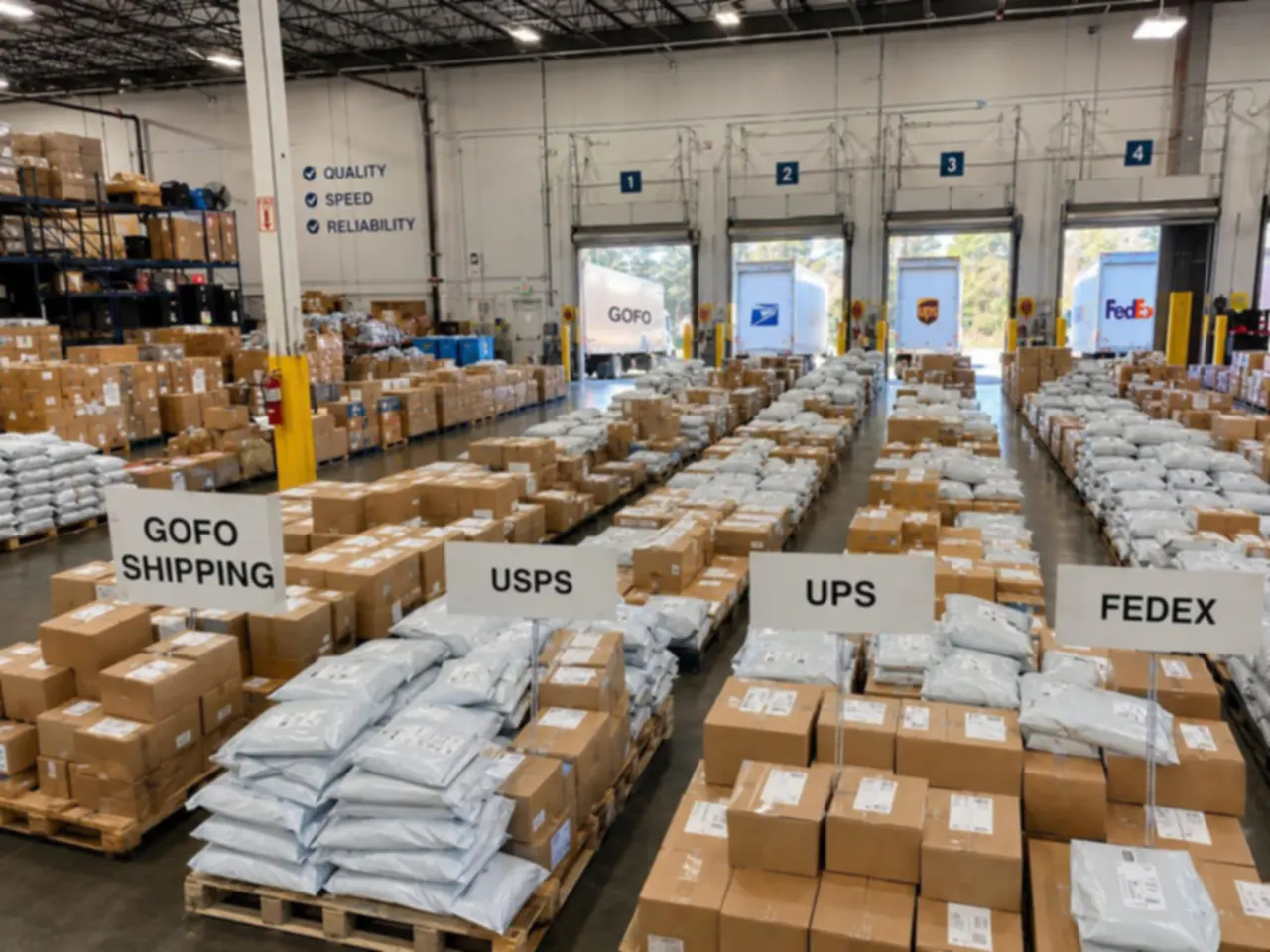
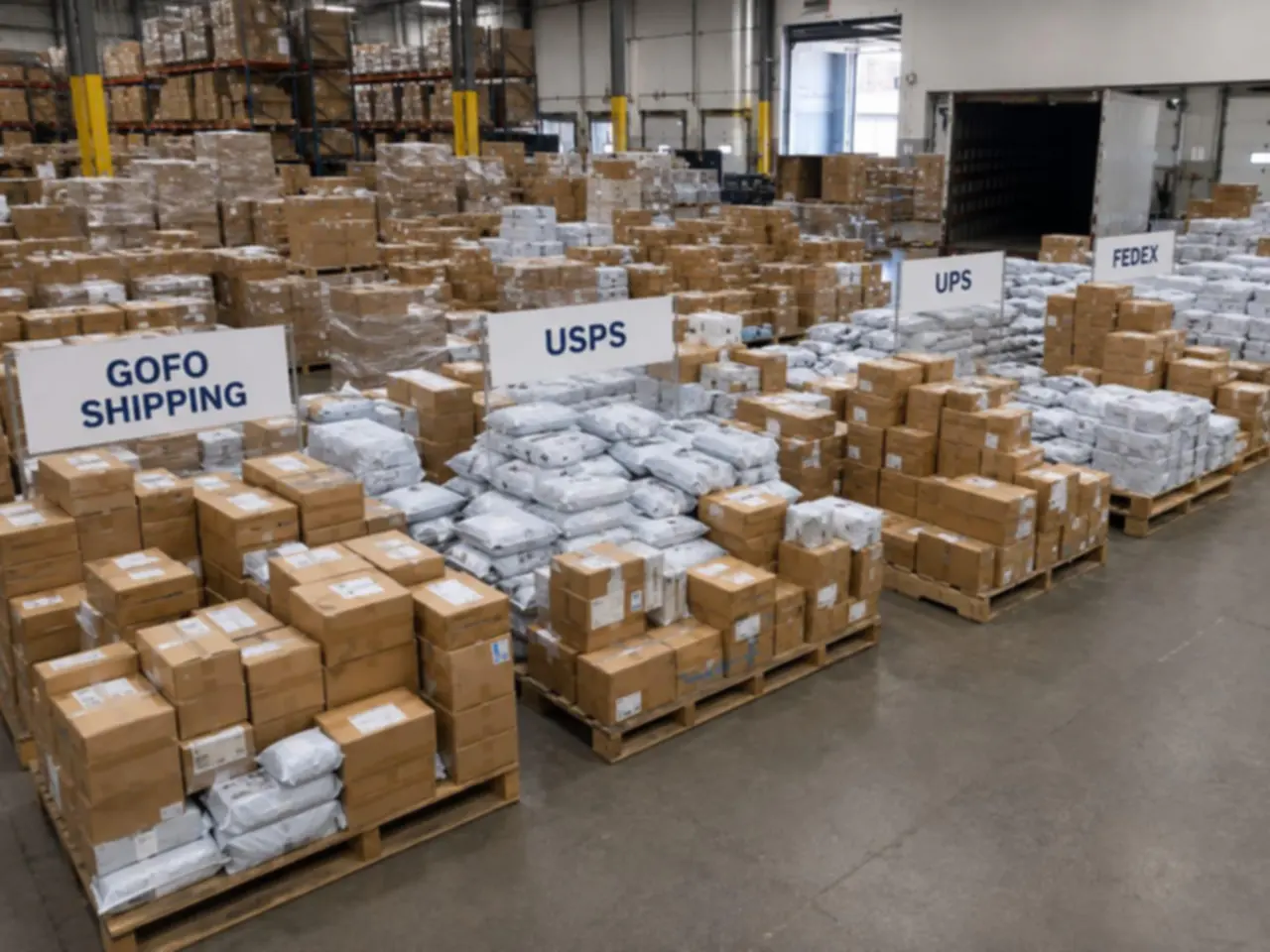
DTC orders almost always go parcel: UPS, USPS, FedEx, GOFO and similar carriers. At our warehouse those carriers pick up on a schedule, Monday through Saturday, so parcel orders flow out daily without anyone booking a truck.
Wholesale fulfillment usually moves as freight. A few cases might still go parcel (small replenishment orders to independent shops, for example). But once you're talking pallets, it's LTL or a full truckload, booked either by the retailer's carrier, by you, or by the warehouse on your behalf. Each pallet shipment needs a bill of lading.
Timing works differently too. A shopper wants their order fast. A retail buyer wants it on time, and early can be almost as unwelcome as late if their dock is full. Delivery appointments, pickup windows and ship-by dates are part of the order itself, so build some slack into your plan and confirm the dates with your buyer for every PO.
If some of that freight just passes through (say a container lands, and half of it goes straight to a distributor), that's really a cross-docking and freight forwarding job rather than a pick-and-pack one.
What each side costs at one Chicago-area warehouse
We don't like quoting "industry averages" nobody can verify. Here's what we actually charge, so you can see how the pricing logic differs between channels.
DTC (per order)
- First item per order: $2.75 at 1-250 orders a month, dropping to $2.35 at 251-500 and $2.10 at 501-1,000.
- Each additional item in the same order: $0.50.
- Pre-packaged item that only needs a label: $1.25 per order.
- Branded insert: $0.20 per order. Gift note or packing slip: $0.30.
B2B (per case, pallet or order)
- Case pick: $1.50 per case.
- Full pallet outbound: $12 per pallet (handling only, freight excluded).
- Mixed-SKU pallet build: $25 per pallet plus $0.50 per case.
- Retail carton / UCC label: $0.35 per label (you supply correct label data).
- ASN / routing admin: $7.50-$15 per order (EDI software is separate).
- BOL / freight paperwork: $7.50 per shipment.
So picture a hypothetical store order of 40 cases built onto two mixed pallets. Rough handling math: 40 case picks at $1.50, two pallet builds at $25 each plus $0.50 a case, 40 carton labels at $0.35, plus routing admin and a BOL. Call it somewhere around $165 before freight, depending on which lines the order actually needs. The same 40 cases sold one unit at a time through your website would be hundreds of separate parcel orders. Different math, different margins.
Splitting inventory between channels
This bites brands hardest. One pool of stock, two hungry channels.
A big wholesale PO can quietly empty the bins your web orders pick from. Or the opposite happens: a viral week of DTC sales eats the cases you promised a retailer.
A few habits help:
- 01
Keep cases intact when you can
Store wholesale stock as sealed master cartons and only break cases into loose units for DTC as needed. Breaking a case is easy. Rebuilding one to retail spec is not.
- 02
Set a reserve
Decide how many units are held for open or expected POs, and tell your warehouse. A quick count before every wholesale order catches surprises early.
- 03
Plan replenishment around POs
When a buyer sends a forecast, size your next inbound to cover both channels, not just the one shouting loudest this week.
That's the part of B2B vs DTC fulfillment that spreadsheets miss. Our post on multichannel fulfillment goes deeper on keeping stock straight.
Can one warehouse do both?
Yes, and for most growing brands it's simpler than splitting stock across two providers. One receiving point, one inventory count, one bill. What makes it work is the setup, not the building.
At Treasure World, every account starts with a work order that defines how each channel is handled: packaging, labels, inserts, carriers and destinations. For DTC fulfillment, that means box choices, inserts and which orders go out same day (when capacity allows). For B2B fulfillment, it means case picks, pallet builds, carton labels and the buyer's routing instructions. So a retailer PO doesn't get packed like a web order.
One honest note. We handle ASN and routing admin, but we don't sell EDI software. If a retailer requires EDI, you'll typically use a separate EDI provider and pass the details to us. The order handoff method gets confirmed during onboarding.
We're a 3PL in Illinois based in Niles, just outside Chicago, and we ship roughly 1,000+ parcels a day alongside pallet and freight work. If you're weighing whether to keep both channels in one place, request a quote with your SKU count, typical order sizes and the routing guides you're working with, and we'll map out which rates apply.