Key takeaways
- A fulfillment center holds inventory and ships individual orders to end customers.
- The core steps are receiving, storage, picking, packing, shipping and returns.
- A warehouse mainly stores goods; a distribution center moves bulk freight to stores or other sites; a prep center readies stock for marketplaces.
- Many operations, ours included, do more than one of these jobs under one roof.
So, what is a fulfillment center?
Short answer: it's a building where your products live until someone buys them, and then they get packed and shipped to that person. If you've ever wondered what is a fulfillment center actually doing all day, it's that loop, over and over. Inventory comes in by the pallet or carton. Orders go out one box at a time.
That's the core of ecommerce fulfillment. You sell online, the order is passed to the warehouse, and a team picks the item, packs it and hands it to a carrier. The customer never knows (or cares) which building it came from. They care that it showed up, on time and in one piece.
We do this work at our warehouse in Niles, Illinois, just outside Chicago. So this guide comes from the floor, not a textbook.
The order fulfillment process, step by step
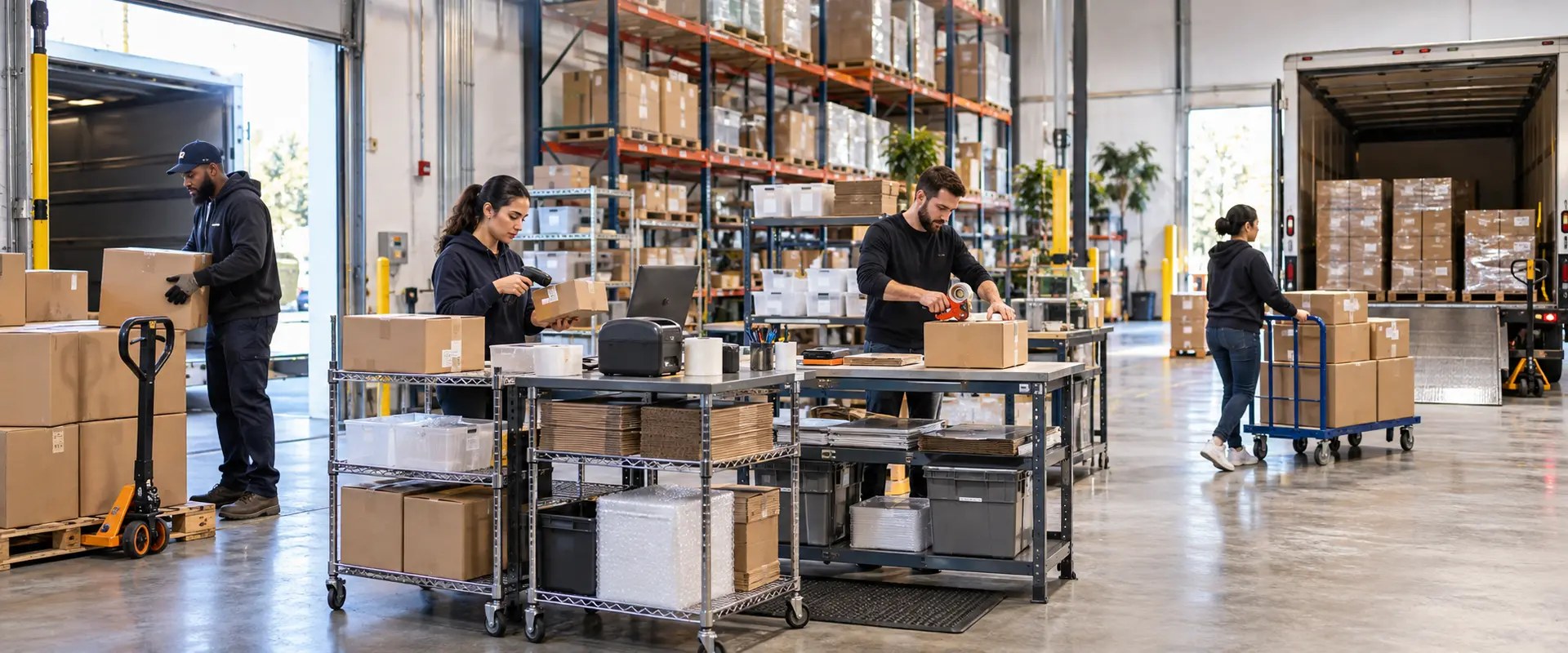
Every fulfillment center has its own habits, but the order fulfillment process almost always follows the same six stages.
- 01
Receiving
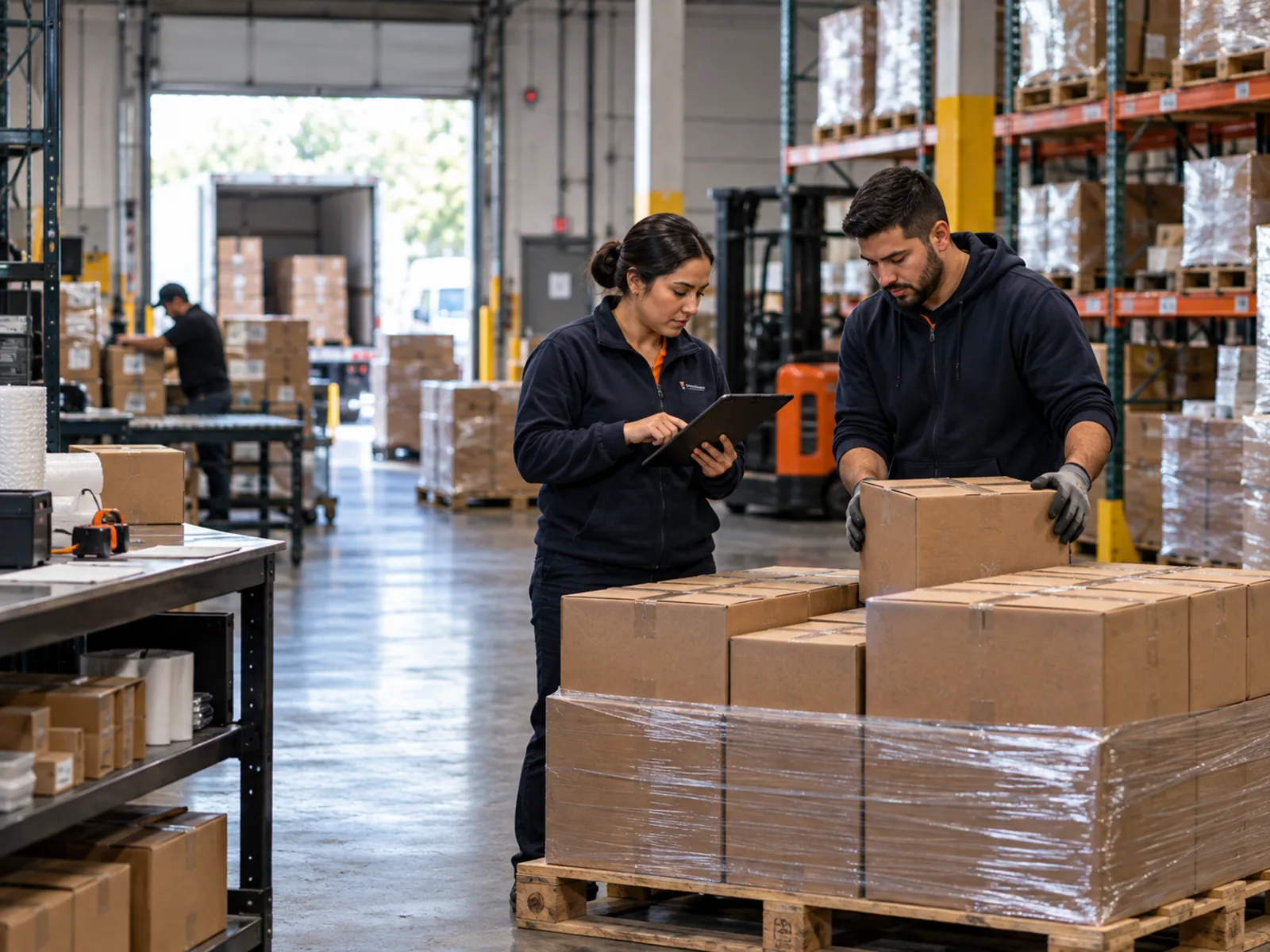
Inventory arrives as parcels, pallets or containers. It's counted against what the seller said was coming, checked for obvious damage, and logged so the warehouse knows what it has.
- 02
Storage
Products go to a location: a shelf, a bin, a pallet rack. Fast movers usually sit closer to the packing area so they're quicker to grab.
- 03
Picking
When an order comes in, someone (or something) pulls the right item from the right spot. Getting the SKU right here prevents most customer complaints later.
- 04
Packing
The item goes into a mailer or box with the right protection, plus any packing slip, insert or gift note the seller wants. Then a shipping label goes on.
- 05
Shipping
Packed orders get sorted by carrier and handed off at pickup. Tracking goes back to the store so the customer can follow along.
- 06
Returns
Some orders come back. A good operation opens, checks and sorts returns so sellable units go back into stock and the rest are dealt with.
Simple list. The hard part is doing all six well on a Monday after a holiday weekend, when the dock is full and orders are stacked up.
What happens at each stage in real life
Receiving is where most problems start. Cartons with no labels, mixed SKUs in one box, counts that don't match the packing list. A fulfillment center that catches those at the door saves you from overselling stock you don't actually have.
Storage is mostly about space and organization, and it's usually billed monthly. At our place, a standard pallet is $35 a month and box or bin storage is $4 to $6 a month; the details are on our warehouse storage page.
Pick and pack is the part most sellers think of first. For direct-to-consumer and marketplace orders, our rates start at $2.75 for the first item on 1-250 orders a month, with $0.50 for each additional item. That service is described on our FBM and DTC fulfillment page.
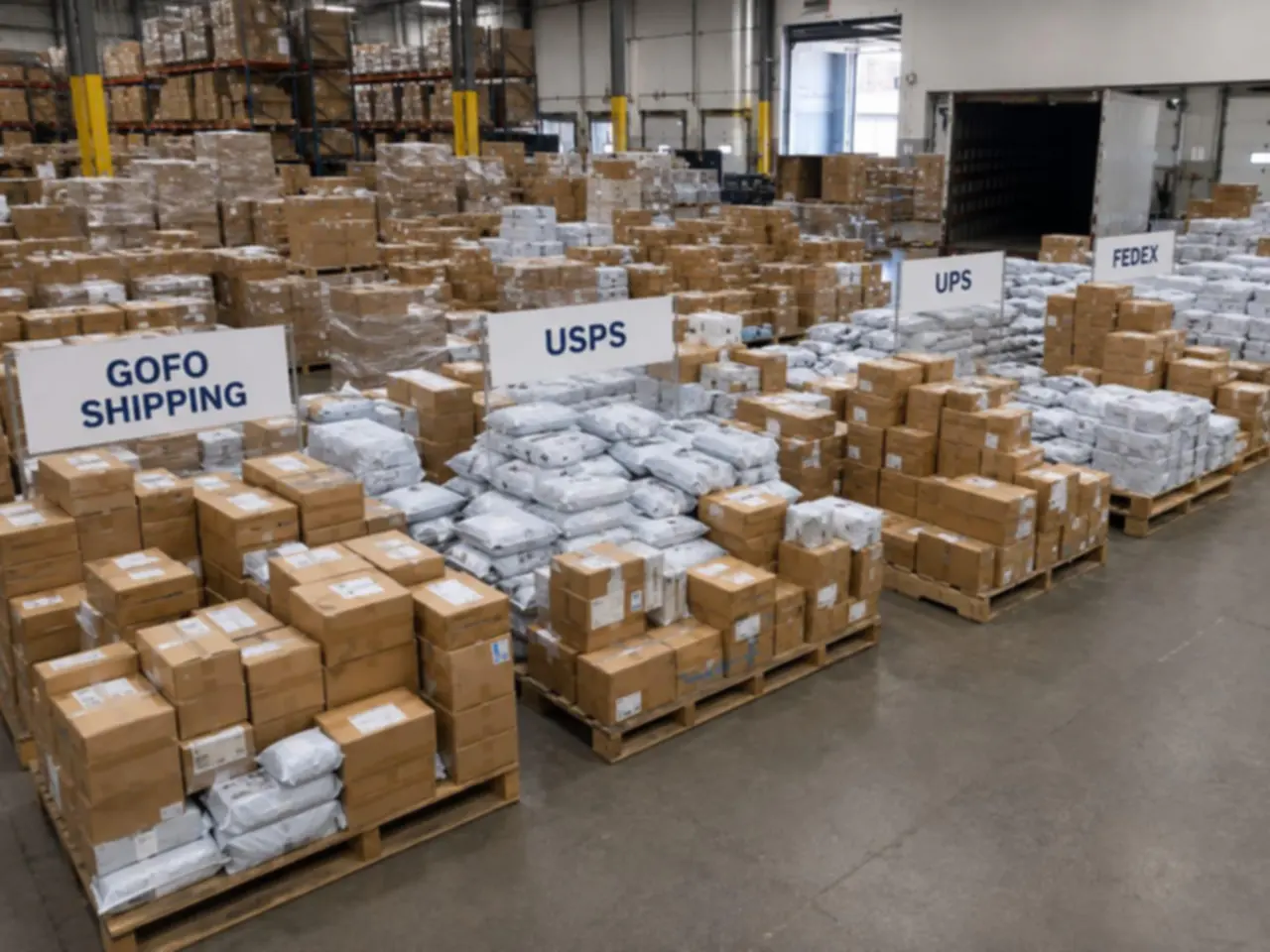
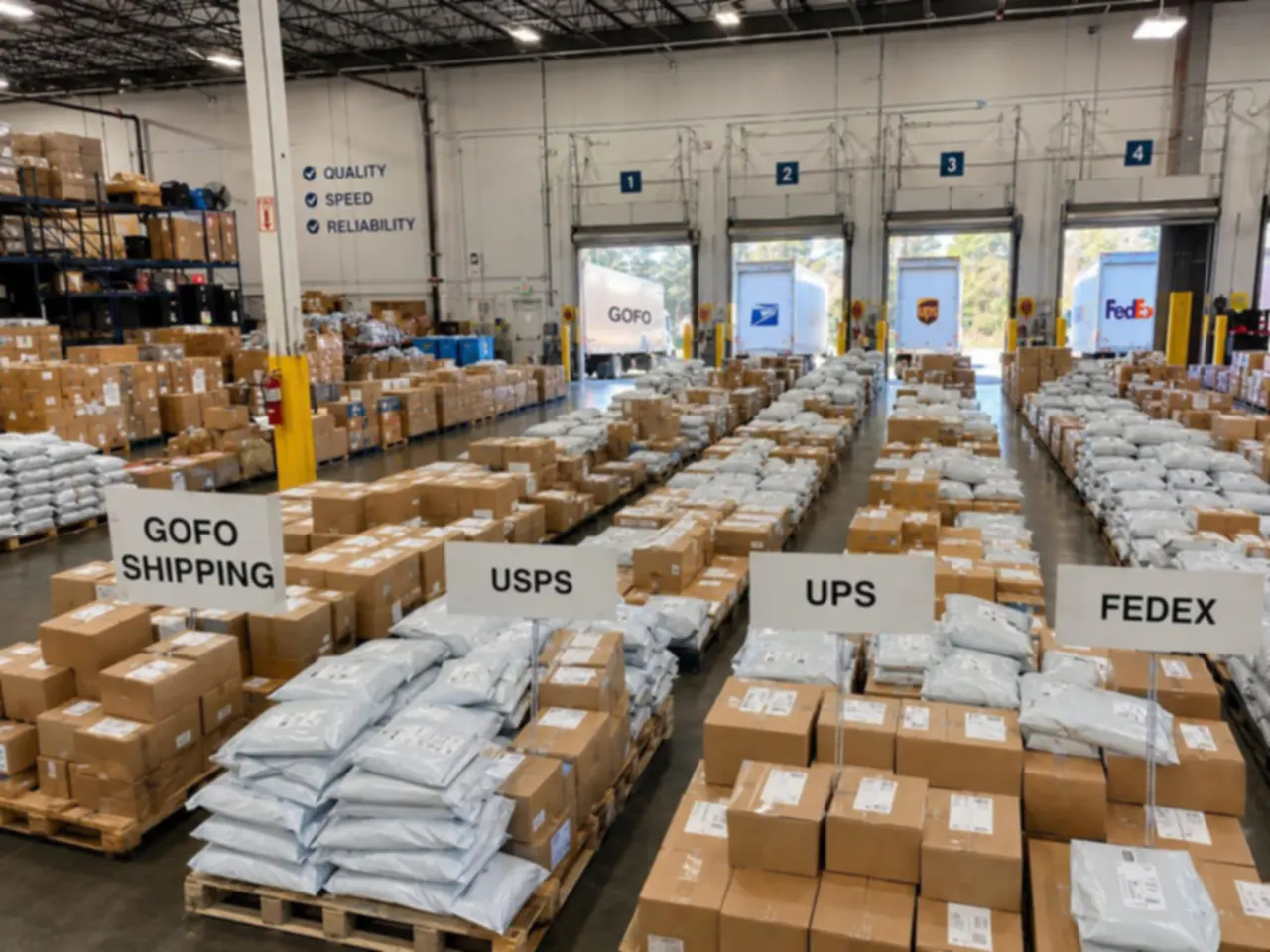
Shipping depends on carrier access. We have scheduled pickups Monday through Saturday for GOFO, UPS, USPS and FedEx. And returns, the step everyone forgets until they're buried in them, run through our returns and removals service.
Fulfillment center vs warehouse (and the other names)
People use these words loosely, and that's fine in conversation. But if you're shopping for help, the difference matters, because each one is built around a different job.
Warehouse
Mainly storage. Goods come in, sit, and leave in bulk. A traditional warehouse might not be set up to ship single orders to consumers at all. When people ask about fulfillment center vs warehouse, this is the heart of it: one stores, the other stores and ships orders.
Distribution center
Built to move product onward quickly, often to retail stores, other warehouses or business customers. Think full pallets and cases more than single parcels. Inventory doesn't usually sit long.
Prep center
Gets inventory ready for a marketplace's own warehouses. Labeling, bagging, bundling, building cartons and pallets to the marketplace's requirements, then sending it in. The prep center isn't shipping to the end customer; the marketplace is.
Fulfillment center
Stores inventory and ships each order to the buyer. Usually handles returns too.
In practice, plenty of operations blur the lines. Ours does prep, storage, order fulfillment, forwarding and returns in one building, which is pretty common for third-party warehouses serving online sellers.
Do you need one?
Not always. If you're shipping a handful of orders a week from home, a fulfillment center might cost more than it saves. The signs that it's time to look usually look like this:
- You're running out of space for inventory.
- Packing orders eats the hours you'd rather spend on sourcing or marketing.
- Ship times slip when you're busy or away.
- You sell on several channels and juggling stock between them is getting messy.
There's also a channel question. Amazon sellers, for example, can send stock into Amazon's network or ship orders themselves (or through a 3PL). Our post on FBA vs FBM breaks down that choice.
One more tip. When you talk to providers, skip the textbook question of what is a fulfillment center and ask what theirs is set up for. Small parcels or freight? Single items or bundles? Steady volume or big seasonal swings? The answers tell you quickly whether your orders will be the main event on their floor or an awkward side job.
Where Treasure World fits
We're a prep and fulfillment warehouse in Niles, IL, processing roughly 1,000+ parcels a day. Sellers send inventory to us, and we receive, store, prep, pick, pack and ship it per their work order. Our fulfillment and dispatch services cover orders from Shopify, Amazon, Walmart, eBay, TikTok Shop and other channels (these are supported workflows, not partnerships).
If you'd like to know what it would cost for your products, send us a few details through the quote form and we'll take a look.