Key takeaways
- With FBA, Amazon stores your inventory and ships each order. With FBM, you (or your warehouse) do.
- FBA usually suits small, fast-moving products. FBM often suits oversized, slow, fragile or custom items.
- Plenty of sellers run both: FBA for core SKUs, FBM for the rest and as a backup when FBA stock runs low.
- Compare total cost per order, not just one fee line. Amazon's fees change, so check Seller Central for current amounts.
FBA vs FBM: the short answer
The FBA vs FBM question comes down to who holds your inventory and who ships each order. With FBA (Fulfillment by Amazon), you send inventory into Amazon's warehouses and Amazon picks, packs and ships every order. With FBM, your listing is fulfilled by merchant, meaning you or a warehouse you hire stores the stock and ships to the buyer.
Neither one is "better." They fit different products and different businesses. And a lot of sellers don't pick at all. They run both.
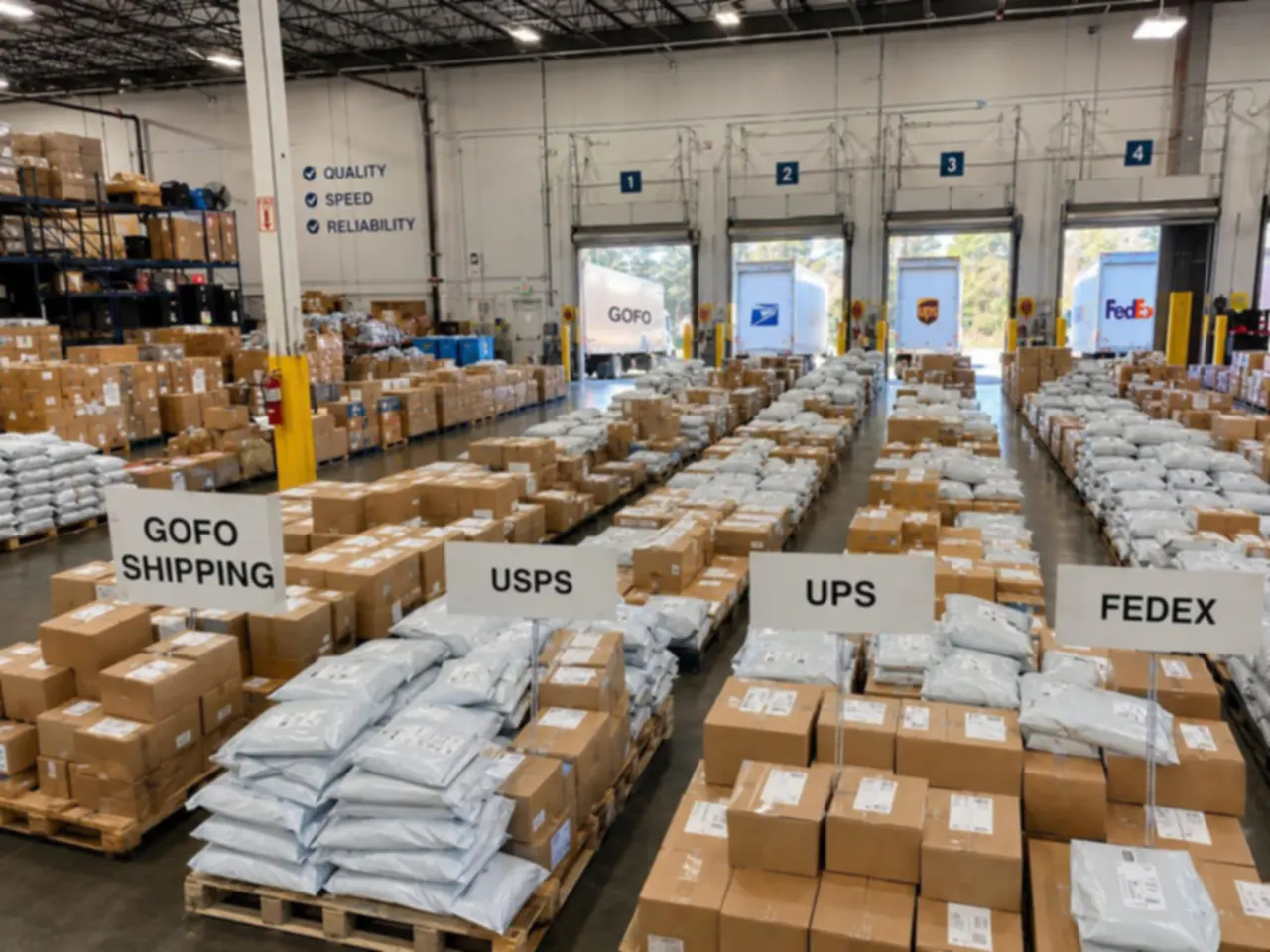
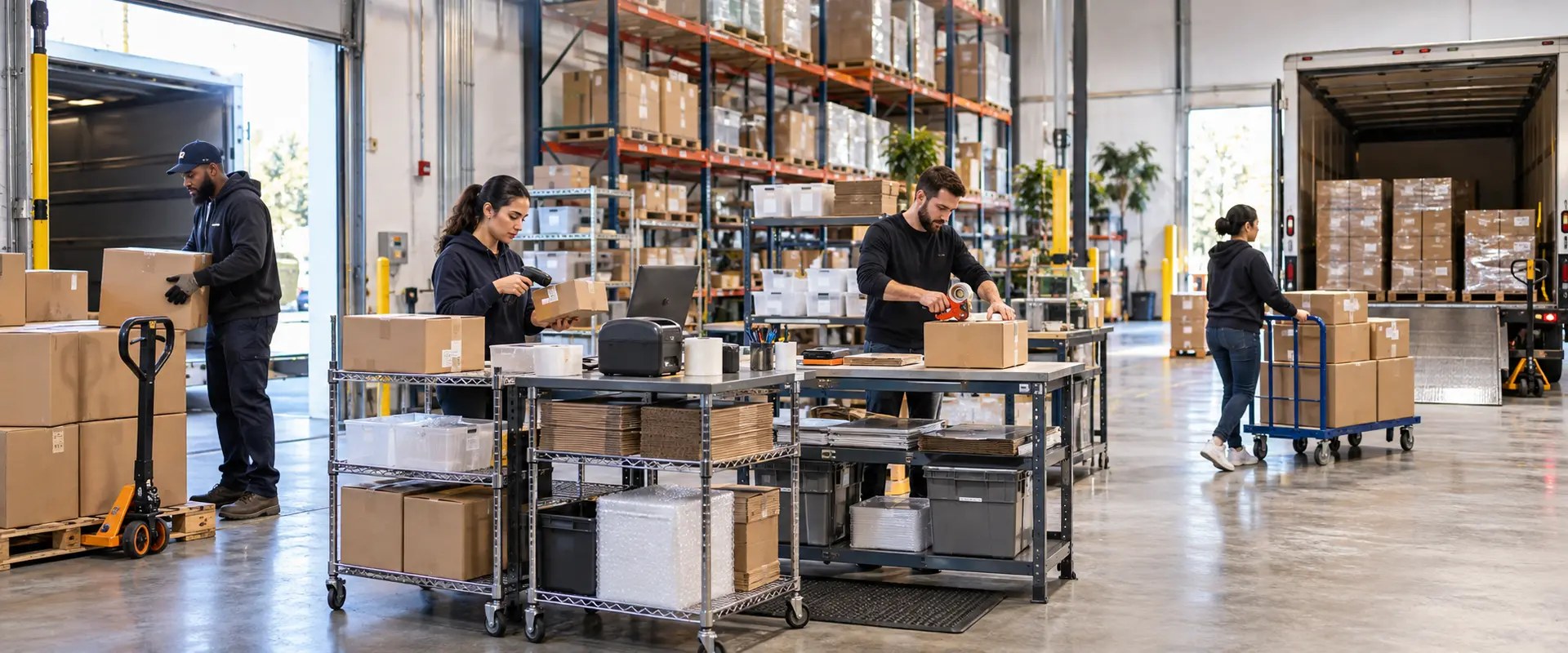
We prep inventory for FBA and ship merchant-fulfilled orders out of the same building in Niles, Illinois, so we see both sides every day. Here's how we'd think it through.
How FBA works
You prep your inventory to Amazon's requirements (labels, bags, cartons), create a shipping plan in Seller Central and send it in. Once it's checked in, Amazon stores it, ships orders, handles most customer service on those orders, and processes returns.
The big draw is that your listings typically become Prime-eligible, and buyers like Prime. The tradeoff is control. Amazon decides where your inventory sits, charges fees for fulfillment and storage, and has rules about how inventory arrives and how long it can sit. Those fees and rules change, so we won't quote numbers here. Check Seller Central for what applies to you today.
There's also the prep step before any of it. That's the part a prep center handles: Amazon FBA prep covers labeling, bagging, case packs and pallets before inventory goes in.
How Amazon FBM fulfillment works
With FBM, inventory never goes to Amazon. An order comes in, and you (or your warehouse) pick it, pack it, buy a valid shipping label and get it to a carrier. You handle customer questions and returns too, within Amazon's seller policies.
Some sellers do this from home. Others hand it to a 3PL. If you're not sure what that kind of warehouse does day to day, our post on what a fulfillment center is explains it.
You keep more control over packaging, inserts and inventory. You also take on the responsibility for shipping speed, tracking and order accuracy, and Amazon measures sellers on those. Prime eligibility for merchant-fulfilled orders depends on Amazon's own programs and requirements, so check Seller Central if that matters to you.
FBA vs FBM side by side
- Who stores inventory
- FBA: Amazon. FBM: you or your 3PL
- Who ships orders
- FBA: Amazon. FBM: you or your 3PL
- Prep before shipping
- FBA: units and cartons prepped for Amazon. FBM: packed per order
- Customer service and returns
- FBA: mostly Amazon. FBM: mostly you
- Control over packaging
- FBA: limited. FBM: full
- Main costs
- FBA: Amazon fees plus prep. FBM: storage, pick and pack, postage
That table hides one thing: inventory location. With FBA, your stock is split across Amazon's network and you can't easily pull it back for another channel. With FBM, it sits in one place, and you can sell it on Amazon, Walmart, Shopify or anywhere else from the same shelf.
When FBA usually fits
Small, light products that sell steadily. That's the classic FBA product. Fulfillment fees on these tend to stay manageable, the inventory doesn't sit long enough to rack up much storage, and Prime helps conversion.
FBA also suits sellers who don't want to deal with customer shipping at all. You send the inventory, Amazon takes it from there.
Where it gets painful: bulky or heavy items, slow sellers that sit for months, and products Amazon restricts or treats specially. Those are where the math often flips.
When FBM makes more sense
Oversized and heavy products are the obvious case. So is anything slow-moving, seasonal, fragile, customized or high-value where you want control over how it's packed.
FBM also makes sense if you sell on several channels and don't want inventory split up. One stock pool, many storefronts. And it's useful when you're testing a new product and don't want to commit a big shipment to Amazon yet.
The catch is that someone has to ship every single order, on time, every day. That's where a warehouse comes in. Our FBM and DTC fulfillment service starts at $2.75 for the first item per order (at 1 to 250 orders a month), and $0.50 for each additional item. Postage is separate, and full rates are on the pricing page.
Running FBA and FBM together
This is what a lot of established sellers end up doing, and it's simpler than it sounds when both run out of one warehouse.
A typical setup: fast movers go into FBA. Bulky or slow items stay merchant-fulfilled. And a reserve of your FBA SKUs sits on our shelves, so if Amazon stock runs low or a shipment gets delayed at check-in, you can switch those listings to merchant-fulfilled and keep selling while the next shipment goes in.
- 01
Split your catalog
Sort SKUs by size, speed and margin. Decide which go to FBA, which stay merchant-fulfilled, and which get both.
- 02
Keep one inventory base
Inventory lands at the warehouse first. Some gets prepped and sent to Amazon. The rest stays for direct orders.
- 03
Replenish from the same shelf
When FBA stock gets low, the next shipment gets prepped from the reserve you already have on hand.
On our side, that's Amazon seller fulfillment for merchant-fulfilled orders and FBA prep for the inbound side, under one roof.
How to decide FBA vs FBM for your products
Pick a few of your main SKUs and work out the full cost per order both ways. For FBA: prep, inbound shipping to Amazon, and Amazon's current fees from Seller Central. For FBM: storage, pick and pack, packaging and postage. Then factor in what doesn't show up in a spreadsheet, like how much time you have and whether Prime moves the needle for your category.
If FBA wins, our breakdown of FBA prep center cost shows what the prep step runs. If it's close, try both on a few SKUs and let the sales data decide. When you want numbers for your products, send us the details and we'll quote both sides.