Key takeaways
- A 3PL (third party logistics provider) handles the physical side of selling: receiving, storage, prep, packing and shipping.
- You keep ownership of your inventory, your listings and your customers. The 3PL does the warehouse work under a written work order.
- Billing is usually per activity: receiving, storage, per-order pick and pack, and add-ons, with postage on top.
- Most sellers look for a 3PL when packing eats their time, they run out of space, or they sell on more than one channel.
What is a 3PL, in one paragraph
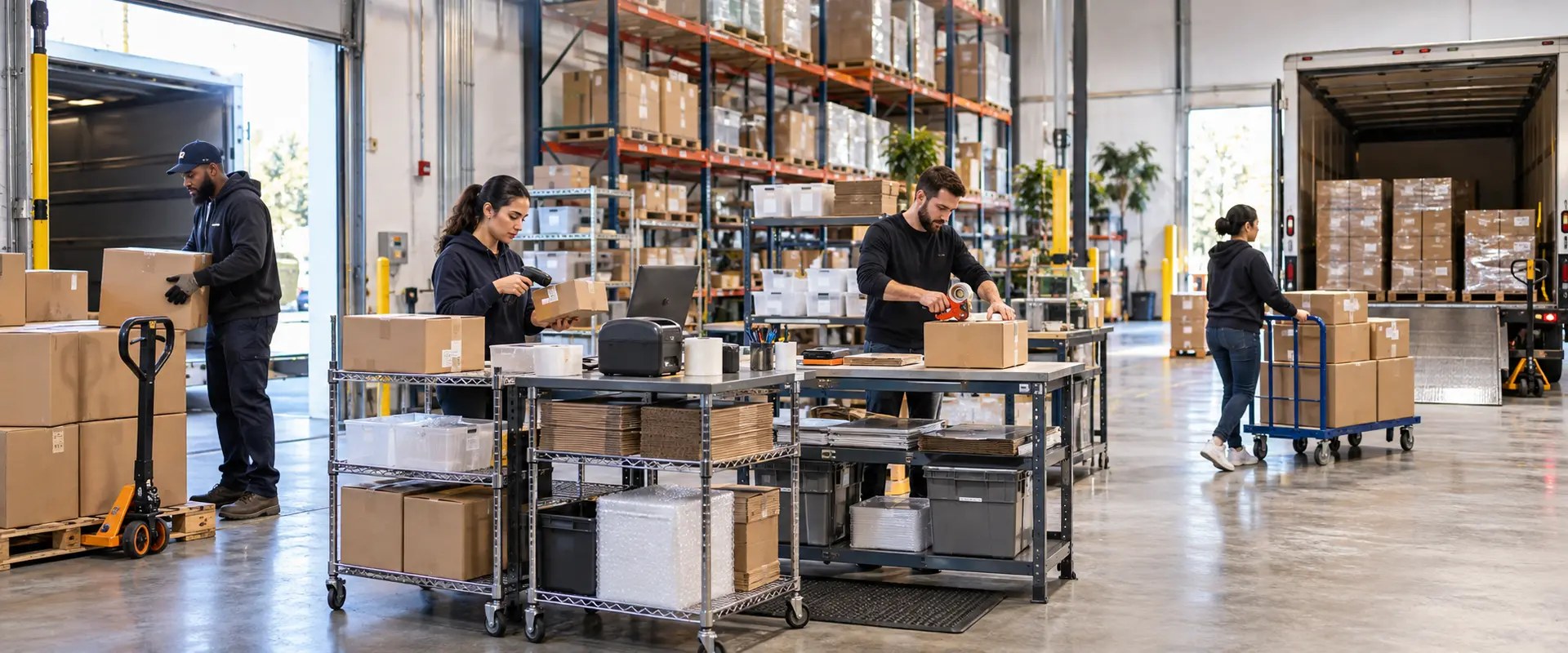
3PL stands for third party logistics. It's a company you hire to do the warehouse side of your business: take in your inventory, keep it on shelves or pallets, get it ready for a marketplace, and ship it out when orders come in. You still own the stock and you still run the store. They do the lifting, counting, labeling and packing.
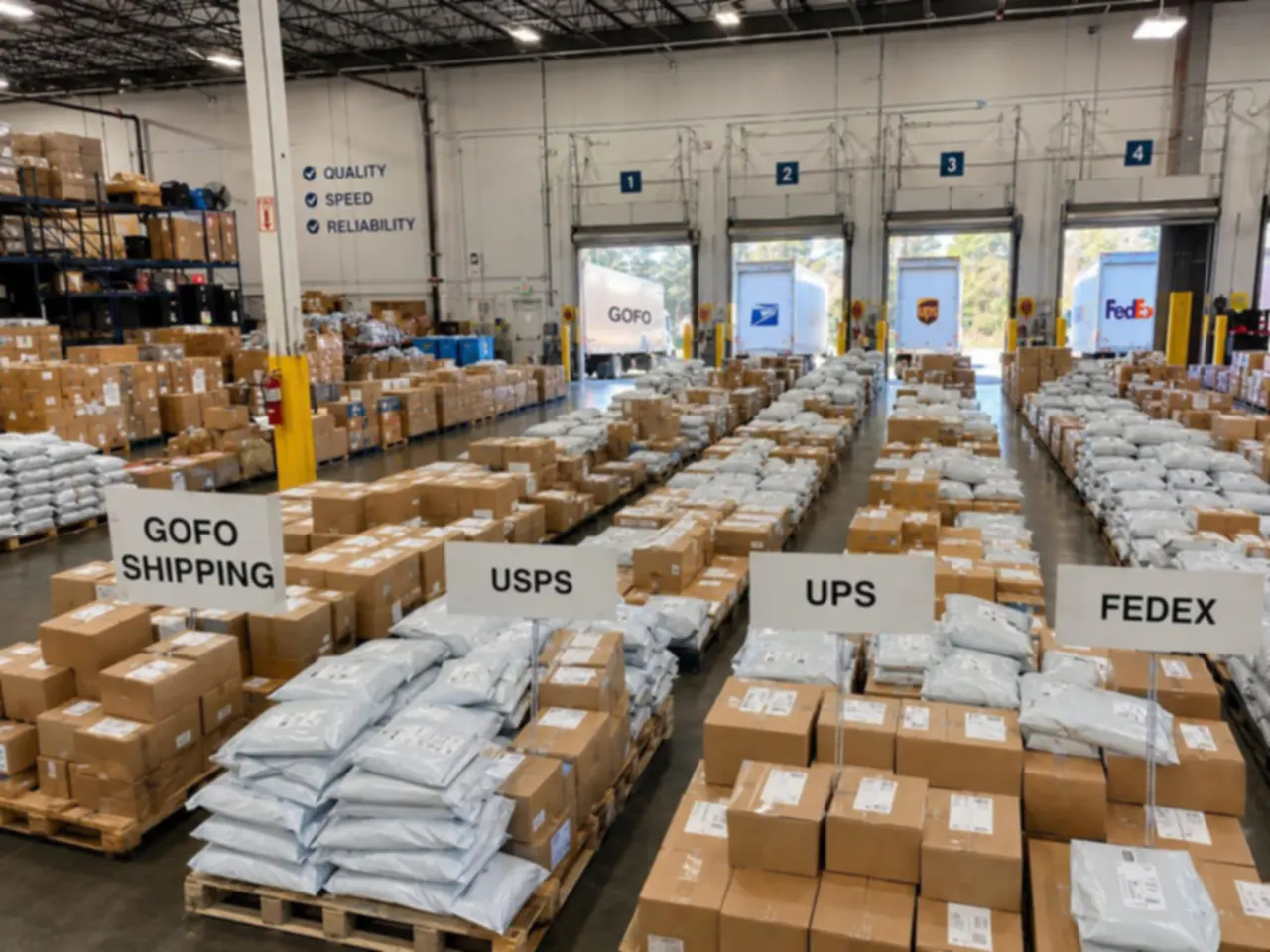
That's the textbook answer to what is a 3PL. The practical answer is a building full of other people's products, a dock where trucks show up all day, and a team working through a stack of work orders. We run one of these in Niles, Illinois, so this guide is written from the floor, not from a glossary.
1PL, 2PL, 3PL: where the name comes from
You'll see these labels in logistics articles, and they're simpler than they sound.
- A first party is you, the seller, doing it all yourself from a garage or your own warehouse.
- A second party is usually the carrier that physically moves goods, like a trucking company or parcel service.
- A third party sits in between and handles storage and handling on your behalf. That's the 3PL.
Some people go on to 4PL and beyond (companies that manage several 3PLs for you). For most ecommerce sellers, that's not a conversation worth having yet.
What 3PL services usually include
Every warehouse has its own menu, but most 3PL services fall into a few buckets.
Receiving
Inventory arrives as parcels, pallets or full containers. The team counts it in, checks for obvious damage and puts it away. Problems get flagged before they turn into missing stock months later. See how we handle inventory receiving if you want the details.
Storage
Your products sit in bins, on shelves or on pallets until they're needed. You pay for the space you use, usually monthly.
Marketplace prep
Getting units ready for Amazon or Walmart warehouses: labels, poly bags, bubble wrap, bundles, carton labels. Our Amazon FBA prep page shows what that work looks like.
Order fulfillment
When a customer orders from your store, the 3PL picks the item, packs it and hands it to the carrier. If that's new to you, our guide on what pick and pack is walks through it step by step.
The odd jobs
Returns, relabeling, kitting, inspections, container unloading. The work nobody plans for but every seller ends up needing.
What a 3PL warehouse doesn't do
This part gets skipped a lot, and it causes most of the disappointment we hear about.
A 3PL warehouse isn't your marketplace account manager. It won't fix a suspended listing, and it can't promise Amazon or Walmart will accept a shipment. You stay responsible for your marketplace rules, your labels and your customer addresses.
It also doesn't control the carriers. Once a parcel leaves the dock, delays and damage in transit are between you and the carrier. A good 3PL will help you document things (photos at receiving, for example) but it's not the one driving the truck.
And it won't take anything. Every warehouse has a prohibited list. Ours excludes hazardous materials and chemicals, counterfeit or unsafe goods, and a few specific categories, and we ask for proof of source on some products. Ask for that list before you sign anything.
How third party logistics billing works
Most 3PLs bill per activity instead of one flat fee. That way a seller with 50 orders a month doesn't pay the same as one with 5,000. Here's what a few lines look like at our warehouse near Chicago:
- Carton receiving
- $1.00 per carton
- Pallet receiving
- $10.00 per pallet
- Standard pallet storage
- $35 per month
- Bin storage
- $4-$6 per month
- Pick and pack, first item
- $2.75 per order (1-250 orders/month)
- Each extra item
- $0.50
- Wholesale FBA prep
- From $0.70 per unit
Postage, freight and packaging materials are separate unless a quote says otherwise. So when you compare providers, compare the whole bill for a normal month, not one rate. Our breakdown of how much a 3PL charges has a worked example, and every rate we post is on the pricing page.
Signs it's time to use a 3PL
Nobody needs a 3PL on day one. Knowing what is a 3PL helps, but knowing when to use one matters more, and a few signs show up again and again:
- Packing orders takes more hours than selling does.
- Inventory has spread from a closet to a garage to a storage unit.
- You've added a second or third channel and stock counts keep drifting.
- A container or a few pallets are coming and there's nowhere to put them.
- You want to go on vacation without shipping orders from a hotel room.
If two or three of those sound familiar, it's probably time to at least get a quote. If you're on the fence, our honest comparison of 3PL vs in-house fulfillment covers what you give up, too.
What working with a 3PL actually looks like
Here's how it runs at our place, and most good warehouses follow something close to it.
- 01
Share your requirements
Products, channels, rough volume and which services you need.
- 02
Confirm the work order
Handling, packaging, storage and destination are written down and priced before anything ships.
- 03
Send your inventory
Boxes, pallets or containers arrive for receiving, once onboarding and verification are complete.
- 04
Prepare and dispatch
Stock gets prepped, stored, forwarded or packed, exactly per the work order.
One thing we're strict about: inventory doesn't ship to us until the company details are verified and inbound instructions are confirmed. It sounds slow. It saves a lot of mystery boxes.
If you're looking for a 3PL in Chicago, or just want to see how our 3PL services fit your products, request a quote with your SKUs and monthly volume.