Key takeaways
- A leased unit gives you control, but you also take on the lease, utilities, insurance, staffing and every truck that shows up.
- Self-storage is cheap and easy to start, but most units aren't built for freight deliveries, pallets or daily shipping.
- With a 3PL you pay for what you use: at Treasure World, $35 a month per standard pallet, $4-$6 a month per bin, and pick/pack from $2.75 per order.
- Before signing anything, ask who receives trucks, who pays for insurance, and what happens when you need to leave.
When the garage stops working
It usually starts small. A few cartons in the spare room. Then a pallet in the garage, then a second one, and suddenly you're stepping over boxes to get to the car. At some point every growing ecommerce seller types the same thing into Google: small warehouse space in Chicago. Fair enough. You need room, and you need it to not be your house.
We run a prep and fulfillment warehouse in Niles, Illinois, just northwest of Chicago, so we talk to a lot of sellers right at this stage. Some should lease their own space, some should stay in self-storage a while longer, and some are better off with a warehouse that already has the dock and the carrier pickups. Here are all four options, including the ones that don't involve us.
One note up front. We're not going to quote Chicago lease prices or square-foot rates here. They vary a lot by area, building and listing, and they move. Get real quotes from landlords or a commercial broker. The only concrete numbers below are our own posted rates.
Option 1: Lease your own small unit or flex space
This is what most people picture when they search for warehouse space for rent. A small industrial unit or flex space (part office, part warehouse) with your name on the door.
What you get. Control. Your own key, your own layout, your hours, and nobody else touches your stock.
What you still do yourself. Pretty much everything else. You sign a lease (often multi-year, sometimes with a personal guarantee). You pay utilities, insurance and probably some share of building costs. You hire and manage whoever packs orders. You figure out how a 40-foot container gets unloaded if the unit doesn't have a dock door, and whether you need a forklift or pallet jack. You set up carrier pickups. Sick or on vacation? Orders still go out.
When it fits. When volume is steady and predictable, you already have (or want) staff, and you need things a warehouse can't easily give you, like a showroom, light manufacturing or very custom packing. If you're weighing that path, our 3PL vs. in-house fulfillment breakdown goes deeper on the tradeoffs.
Option 2: Shared or coworking warehouse space
Shared warehouse space is a newer middle ground. You rent a cage, a few pallet spots or a section of floor inside a bigger building, often month to month, and share the dock, the packing tables and sometimes the equipment with other small businesses.
What you get is flexibility and a real loading dock without signing a long lease.
What you still do yourself: the actual work. You (or your staff) drive there, pick, pack, label and hand off parcels. Hours may be limited. Receiving a freight truck might cost extra or need advance booking. Insurance for your inventory is usually on you, and the rules on what you can store vary by operator.
It fits sellers who like packing their own orders but need to get out of the house, and who live close enough to make the daily trip worth it.
Option 3: Self-storage units
Self-storage is the easiest thing to rent. Sign online, get a code, move boxes in this afternoon.
The catch is that self-storage was built for couches and holiday decorations, not for freight. Plenty of facilities don't want commercial deliveries at all, many have no dock, and a box truck or pallet delivery can be a real problem. Access hours may be fine for storage but awkward for daily shipping. And you're still packing orders somewhere, usually your kitchen table, then driving parcels to a drop-off point.
It works as a short bridge. Low SKU count, parcel-sized inventory, a few orders a day. Once pallets or containers enter the picture, it starts to fight you.
Option 4: A 3PL where you pay for what you use
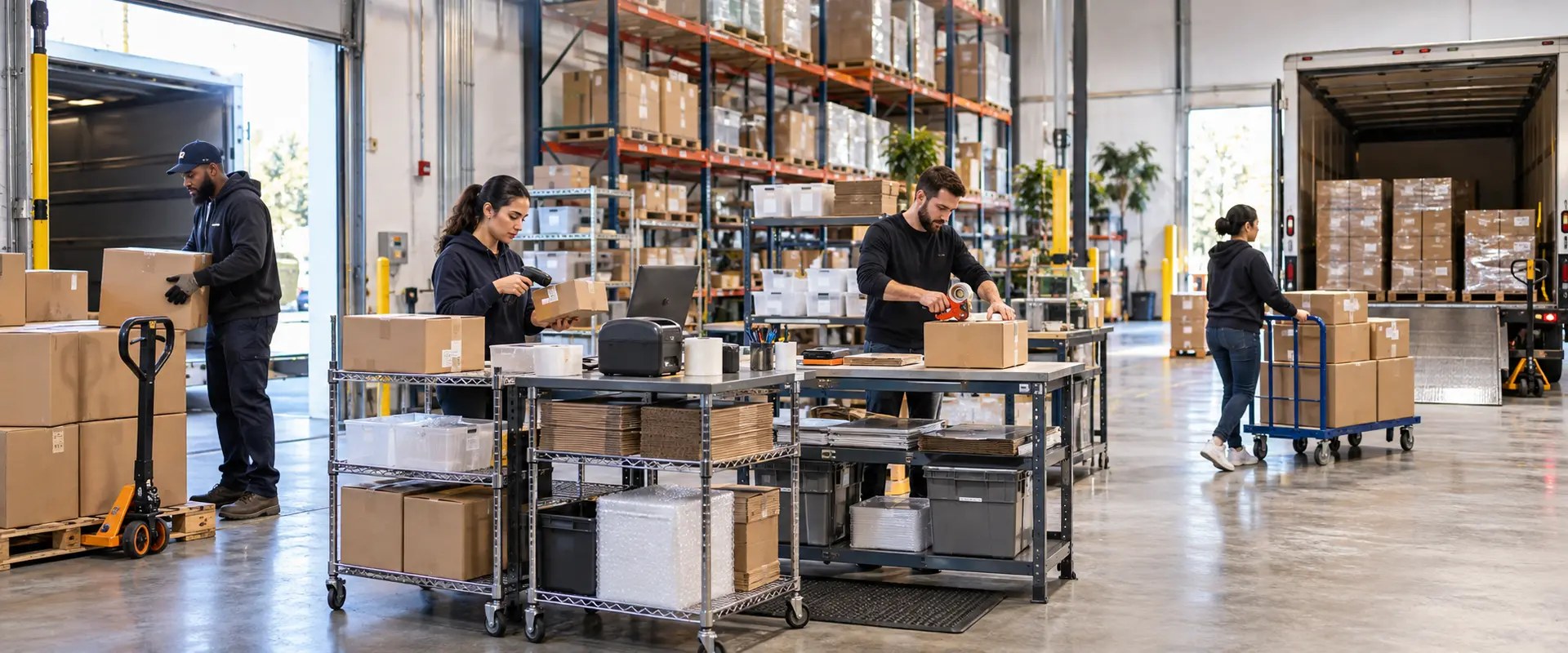
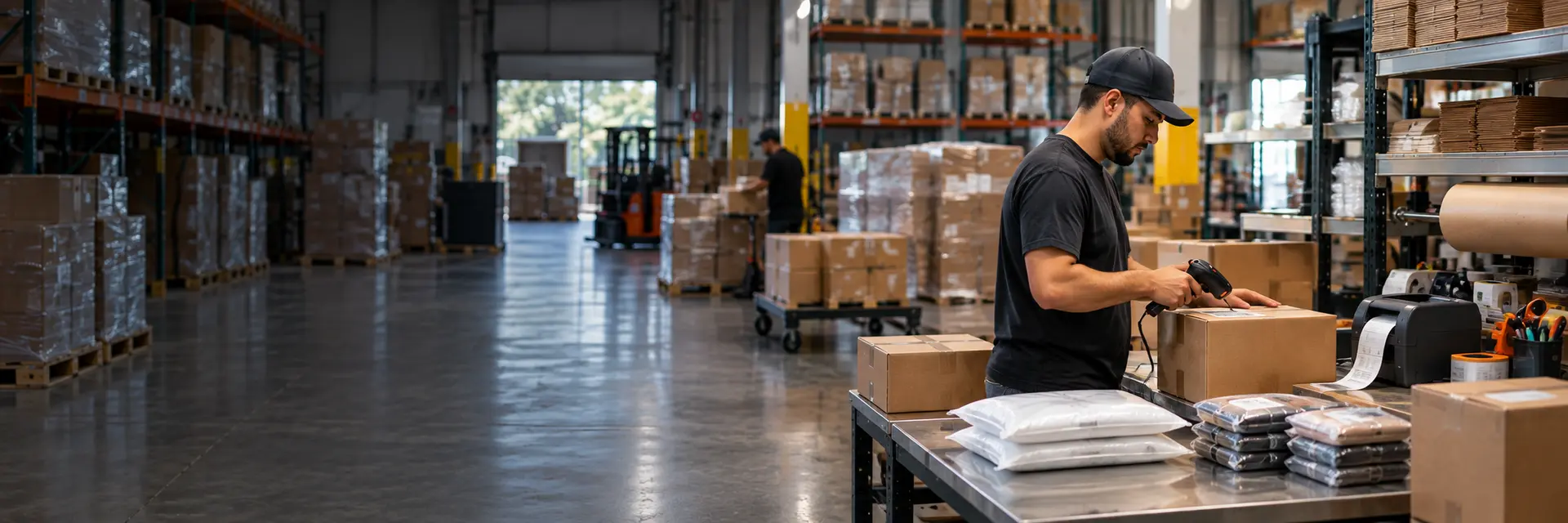
The fourth route skips the space question entirely. Instead of renting square feet, you rent storage by the pallet or bin and pay per order for fulfillment. The warehouse already has the dock, the staff, the racking and the carrier pickups. Your supplier ships to them, and orders go out from there.
Here's how that looks with our posted rates for warehouse storage in Chicago:
- Standard pallet up to 72 in.
- $35/month
- Standard box / bin storage
- $4-$6/month
- Pallet receiving
- $10/pallet
- Parcel / carton receiving
- $1/carton
- Pick and pack, 1-250 orders/month
- $2.75 first item/order
- Additional item in same order
- $0.50/item
That's pay per pallet storage in the plainest sense: two pallets, two pallet charges. No lease. Volume tiers bring the pallet rate down (25-99 pallets are $32 each), and our pallet storage cost guide explains the aged inventory surcharges and handling fees that sit around that base number.
A hypothetical month
Say you store 3 standard pallets and 4 bins of small items, receive 2 pallets of new stock, and ship 200 single-item orders. Using only posted rates: 3 x $35 = $105, 4 bins at $4-$6 = $16-$24, receiving 2 x $10 = $20, and 200 x $2.75 = $550. Roughly $691 to $699 before packaging materials, inserts or any add-ons. This is a made-up example, not a quote. Your actual quote confirms which lines apply to your products and order profile.
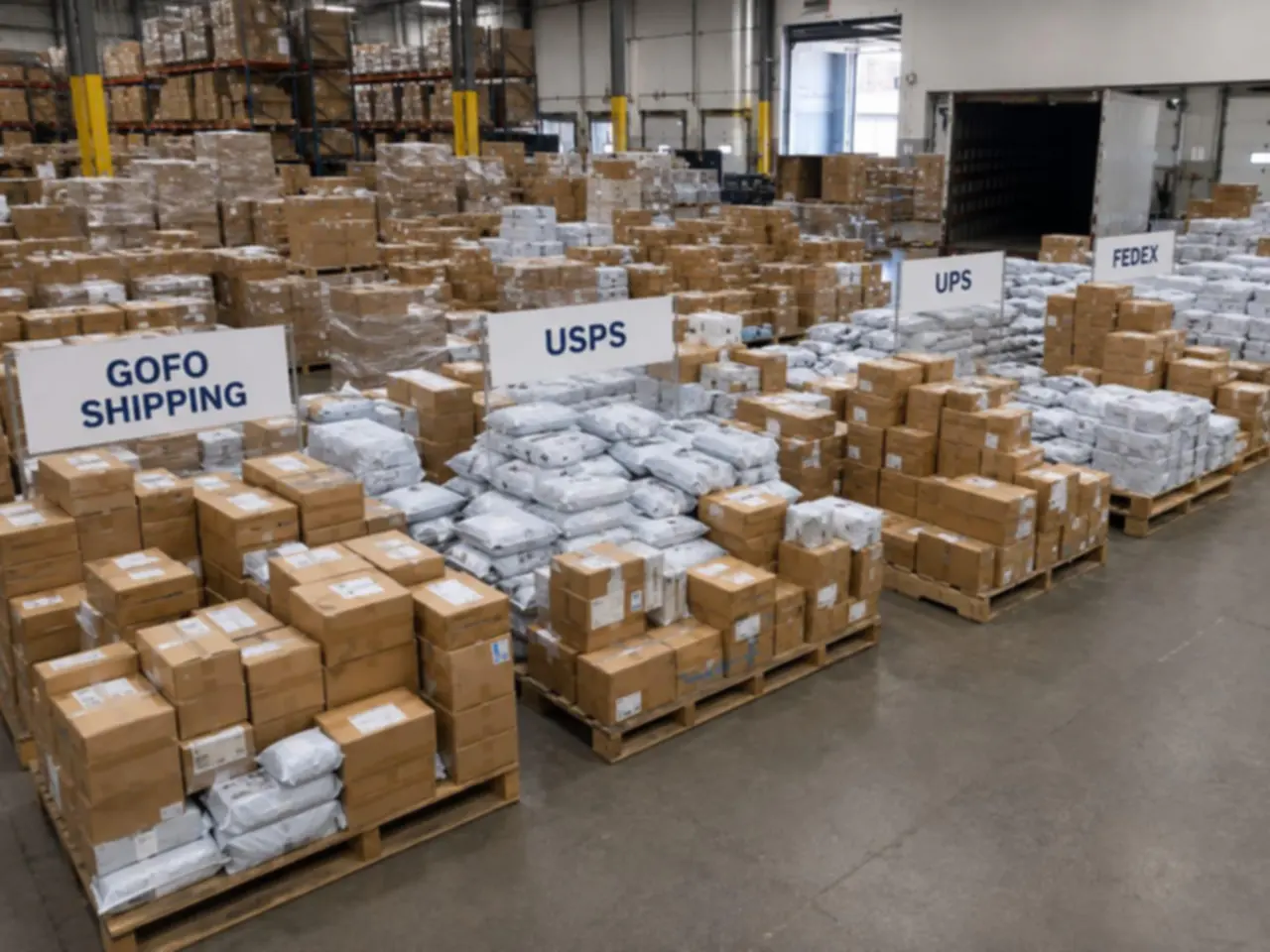
What you still do: sell, keep listings right, buy valid shipping labels or share orders the way agreed at onboarding, and pay the invoice on time. What you stop doing: packing, receiving trucks, booking pickups. We have scheduled carrier pickups Monday through Saturday for GOFO, UPS, USPS and FedEx, and the team handles around 1,000+ parcels a day.
It fits most sellers who outgrew the garage but don't want to become a warehouse manager. If that's you, ecommerce fulfillment in Chicago covers how order handling works, and 3PL warehousing shows the full storage and movement side, including receiving and cross-docking.
Small warehouse space in Chicago: a quick comparison
- Leased unit: most control, most commitment. You handle staff, trucks, equipment, insurance, utilities and lease terms.
- Shared space: flexible terms and a dock, but you still do the packing and shipping yourself.
- Self-storage: fastest to start, weakest for freight, pallets and daily orders.
- 3PL: no lease, you pay per pallet, bin and order. Less hands-on control over the floor, but the labor, dock and pickups are already there.
Questions to ask before you sign for any space
Whether it's a landlord, a shared warehouse or a 3PL, get clear answers to these first:
- 01
How long am I committed?
Lease length, notice period, renewal terms, and what it costs to leave early.
- 02
Who receives freight?
Is there a dock? Who unloads a pallet or a container, and is there a charge?
- 03
What equipment can I use?
Forklift, pallet jack, racking. Included, extra, or bring your own?
- 04
Who covers insurance?
Building, liability and your inventory. Get it in writing, with the limits.
- 05
What are the real monthly costs?
Rent plus utilities, maintenance, internet, trash, plus any per-move or per-order fees.
- 06
How do parcels leave?
Are there scheduled carrier pickups, or are you driving to a drop-off every day?
- 07
What can't I store?
Many spaces restrict hazmat, liquids, food or supplements. Check before you ship.
Where we fit
Treasure World Prep Center is at 5673 W Howard St in Niles, IL, just northwest of the city. We work as a 3PL in Chicago for sellers on Amazon, Walmart, Shopify, eBay, TikTok Shop and other channels (supported workflows, not partnerships). Hours are Monday through Saturday, 10 AM to 4 PM CT.
Insurance is a fair question to ask us too. We carry up to $5 million in coverage for qualifying warehouse operations, subject to policy terms, limits and exclusions, so confirm what applies to your inventory before you ship.
If you'd rather compare a real number against the leases you're looking at, send us your details for a quote. Tell us your SKUs, roughly how many pallets or boxes, and your monthly orders, and we'll tell you which lines apply.