Key takeaways
- Cross docking means freight comes in, gets sorted or rebuilt, and goes back out with little or no time in storage.
- It works best when you already know where every carton is going before the truck arrives.
- Storage still makes sense for slow-moving stock or inventory that's waiting on a decision.
- At our Niles warehouse, pallet cross-dock handling starts at $20-$25 a pallet, with freight billed separately.
What is cross docking, in one sentence?
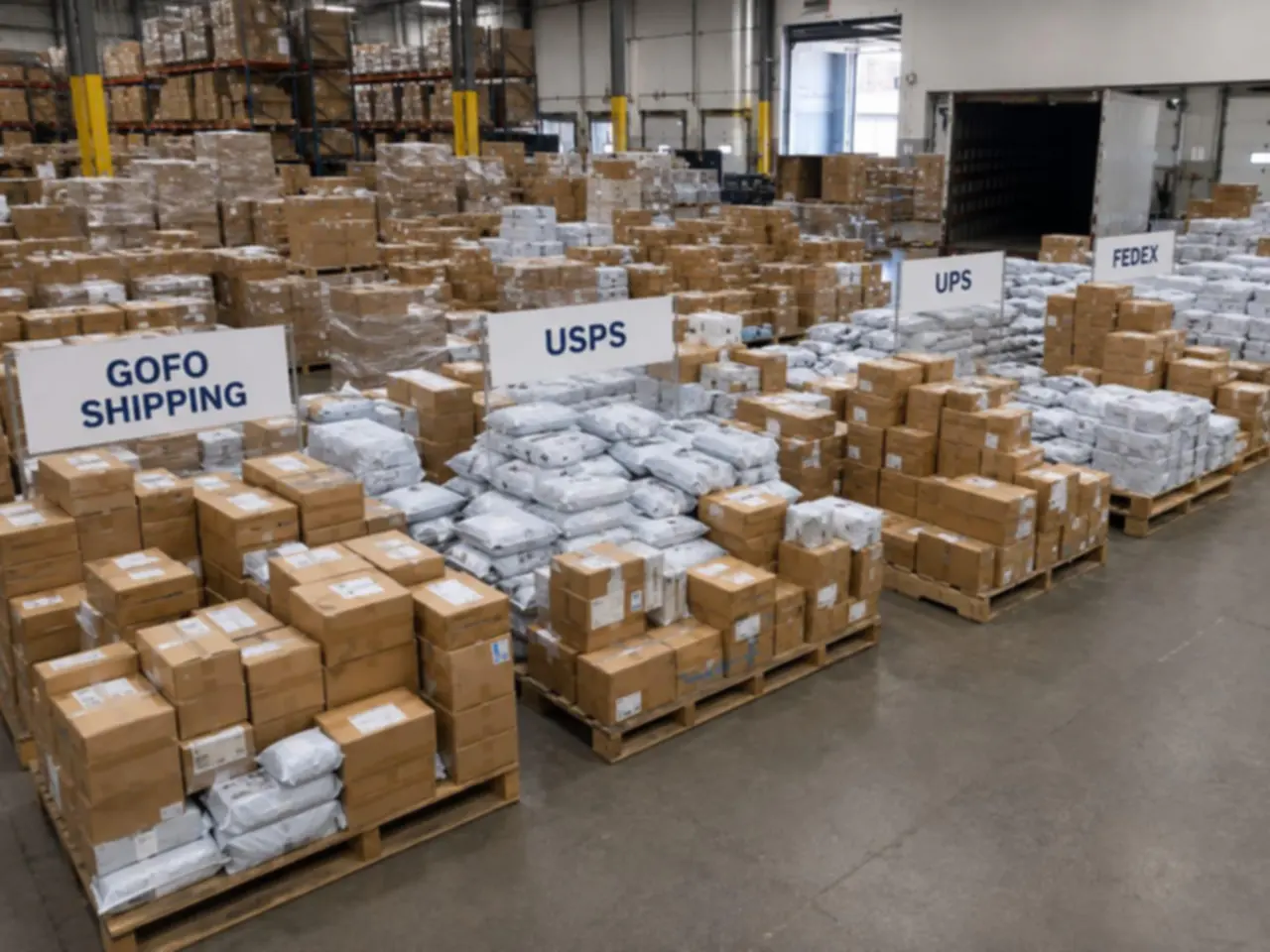
So, what is cross docking? It's the practice of unloading freight at a warehouse and loading it straight onto outbound transport, with a short stop for sorting, labeling or rebuilding pallets, instead of putting it away on a rack for weeks.
That's it. No long-term shelf. No pick faces. The dock is a transfer point, not a parking lot.
The name comes from the physical layout in big distribution centers, where trucks back up to doors on one side and goods "cross" the floor to doors on the other. A smaller cross dock warehouse (like ours) doesn't need a dramatic two-sided building to do the same job. It just needs a clear plan, floor space for staging and someone who checks counts before anything leaves.
How cross docking works, step by step
Every job looks a little different, but the bones are the same.
- 01
The plan comes first
Before the freight arrives, you tell the warehouse where it's going: an Amazon or Walmart fulfillment center, a retailer, a second warehouse, or a mix. Labels, carton counts and pallet requirements get confirmed here.
- 02
Freight is received
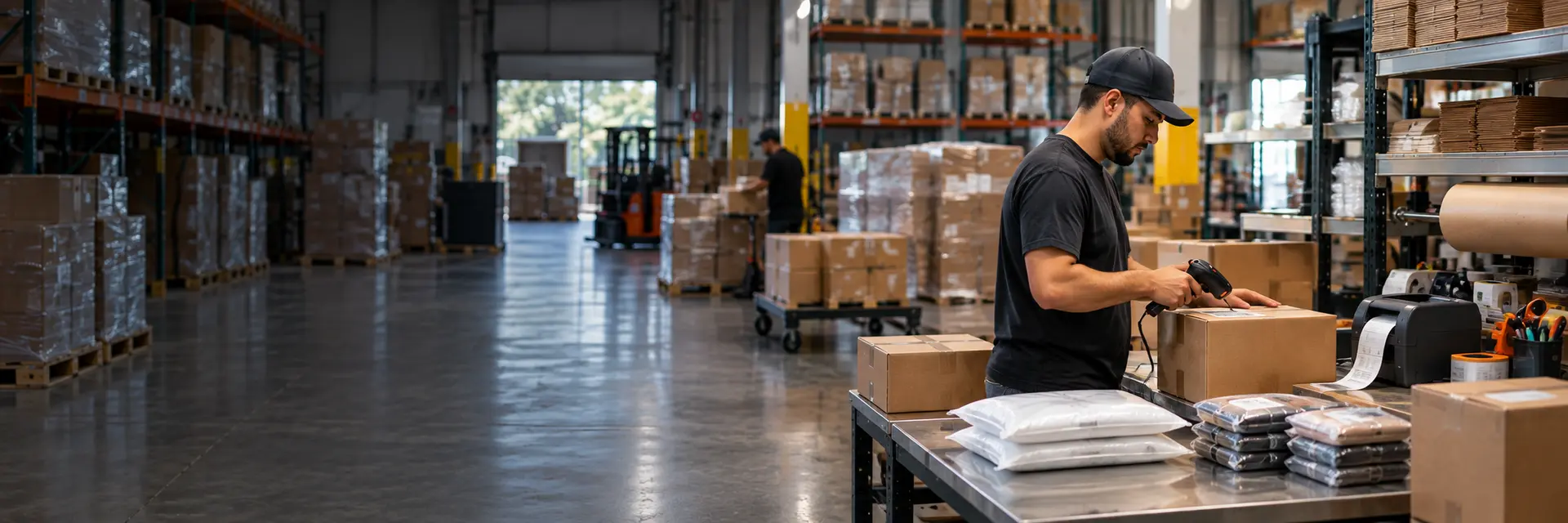
Pallets or a container come in. The team counts cartons against what you said to expect and flags damage or shortages. This is the moment problems are cheapest to fix.
- 03
Sort, label, rebuild
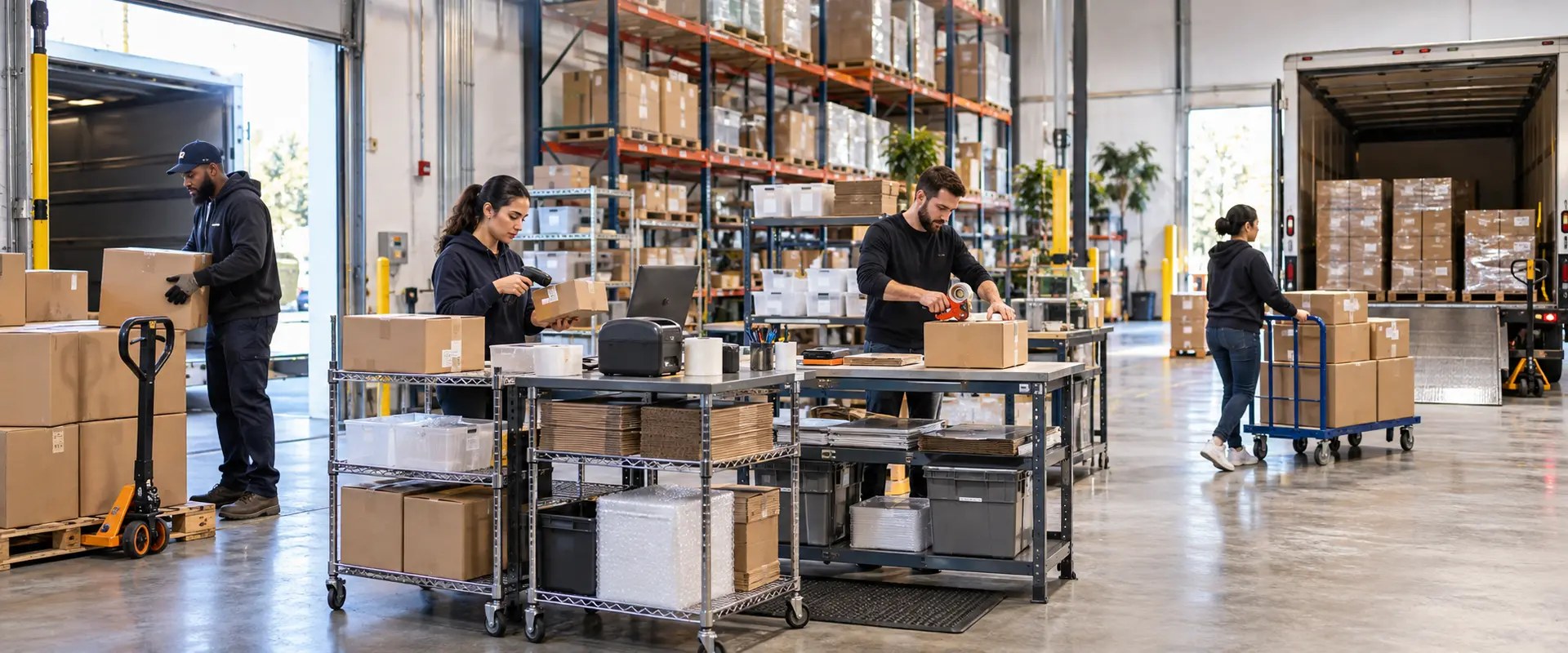
Cartons get split by destination, relabeled if needed, and rebuilt onto new pallets. Sometimes that's ten minutes of work. Sometimes it's a full afternoon on a floor-loaded container.
- 04
Out the door
Outbound pallets or boxes leave on the carrier or freight pickup you've arranged, ideally within a day or two of arriving.
If you're sending inventory our way for the first time, our guide on how to send inventory to a prep center covers what to tell your supplier so the receiving step goes smoothly.
Cross docking vs warehousing: which one do you need?
Honestly, most sellers need both at different times. The question is which inventory belongs in which bucket.
Cross docking fits when...
- You know the final destination of every carton before it lands.
- The product sells fast enough that storing it is just extra cost.
- You're splitting one big inbound (say, a 40-foot container) into several smaller outbound shipments.
- You're replenishing Amazon or Walmart and want to skip a month of storage fees.
Storage fits when...
- You're holding backup stock so your FBA inventory never runs dry.
- The product moves slowly or seasonally.
- You're still deciding where it goes (or waiting on a listing, a buyer or a shipping plan).
A lot of accounts do a hybrid. Part of a container gets cross-docked to Amazon right away, and the rest sits on warehouse storage as a buffer. Our post on pallet storage cost walks through what that buffer actually costs per month.
Cross docking vs transloading
These two get mixed up all the time, and fair enough, they overlap.
Transloading usually means unloading a shipping container (often an import) and moving the goods onto domestic transport, either palletized or loose. Cross docking is the broader idea of moving freight through a dock without storing it. So a transloading job is often a cross-docking job too. You unload, sort by SKU or destination, rebuild pallets and ship.
One thing worth saying plainly: neither one is customs brokerage or international freight forwarding. When a container reaches a warehouse like ours, it has already cleared customs through your own broker or forwarder. We handle what happens once it's on the dock.
What cross docking costs (real numbers)
Rather than quote an "industry average" nobody can check, here's what our own cross docking service in Chicago charges from the Niles, IL warehouse:
- Pallet forwarding / cross-dock
- $20-$25/pallet
- Box forwarding, 1-20 boxes
- $5.00/box
- Box forwarding, 100+ boxes
- $3.50/box
- 40 ft palletized container unload
- $600/container
- 40 ft floor-loaded container unload
- $750-$1,000
- Pallet build
- $30/pallet + $1/carton
Freight itself is separate. If you want the warehouse to coordinate it, freight coordination runs carrier cost plus 10%, or a $25 minimum. A BOL is $7.50 a shipment.
A quick hypothetical so the numbers mean something. Say a palletized 40-foot container arrives with 20 pallets, and all 20 go straight back out to fulfillment centers. Unloading is $600, and cross-dock handling at $20-$25 a pallet adds $400-$500. That's roughly $1,000-$1,100 in handling before freight, and none of it turns into a monthly storage bill. Floor-loaded containers cost more because every carton has to be hand-stacked onto pallets first. The full table is on our pricing page.
Where cross docking goes wrong
Nine times out of ten it's information, not muscle.
Cartons without labels. A packing list that says 480 when 500 showed up (or the other way around). Outbound labels that arrive after the freight does. Mixed SKUs on one pallet with no way to tell them apart. Any of those turns a fast transfer into problem receiving, which is billed at hourly labor and, more importantly, slows everything down.
Timing trips people up too. If the outbound freight pickup isn't booked until the pallets are already built, they sit on the floor waiting, and a two-day transfer turns into a week. Floor space in a working warehouse isn't free, and staged pallets block the next inbound. So book the outbound side (or ask the team to coordinate it) at the same time you book the inbound.
Then there's the Amazon side. If you're cross-docking into FBA, the shipping plan, box contents and carton labels have to exist before the rebuild starts, not after. We can apply labels and build the pallets, but we can't invent a shipment ID. Our post on Amazon FBA prep requirements covers what usually needs to be ready.
The fix is boring. Send the plan before the truck. Label every carton. Tell the team if anything is fragile, oversize or needs special handling. Do that and cross docking is usually the cheapest, fastest way to move a big inbound shipment.