Key takeaways
- Use a new, sturdy box with room for cushioning on every side. The item should never touch the walls.
- Wrap each piece on its own, fill every gap, then shake the box. If anything moves, it isn't done.
- Double box anything that truly can't take a knock, like glass, ceramics and screens.
- A FRAGILE sticker is a note, not protection. The packing has to do the work.
- At Treasure World, bubble wrap runs $0.60-$1.25 a unit and pick and pack starts at $2.75 for the first item.
How to pack fragile items for shipping: start with the trip
Before you think about bubble wrap, think about what the box goes through. It gets tossed onto a pile, slides down conveyors, rides under heavier parcels in a truck and probably gets dropped at least once. That's normal. So when people ask us how to pack fragile items for shipping, the honest answer is: pack it like it will be dropped, because it will be.
We pack a lot of breakable orders at our warehouse in Niles, Illinois. Candles, mugs, glass bottles, small electronics, cosmetics with glass jars. The ones that arrive broken almost always share the same problems. Too little padding, a tired box, or an item rattling around inside.
Here's the whole job, box to shake test.
Choose the right box first
The box is your first layer of protection, and it's the one people cheap out on.
New vs reused boxes
Reused boxes look fine but they've already lost some strength. Every trip crushes the corners a little and softens the walls,. For anything breakable, use a new box. Save the reused ones for t-shirts.
Leave room for cushioning
A box that fits the item snugly feels right, but it's wrong for glass. You want space on all six sides (top, bottom and every wall) so cushioning can sit between the product and the outside. If a corner of the box gets crushed, the crush should land on padding, not on your item. Heavier pieces need more room than light ones.
Don't go too big, though. One mug in a huge box needs a mountain of fill.
Wrap each item in layers
Good bubble wrap packing is less about how much you use and more about how you use it. Here's the order we follow on the packing table.
- 01
Protect the weak spots
Handles, spouts, lids, pumps, stems and screen faces break first. Give them a small pad of paper or an extra fold of wrap before anything else.
- 02
Fill the inside if it's hollow
Vases, mugs and jars are stronger when the inside is packed with crumpled paper. It stops the walls from flexing on impact.
- 03
Wrap the whole piece
Roll it in bubble wrap, bubbles facing in, and go around more than once. Tape it so it can't unroll in transit.
- 04
Keep parts separate
A lid and a jar should be wrapped apart, not stacked. Glass on glass is how you get a chip on both pieces.
- 05
Seal anything that can leak
For cosmetics and liquids, tighten caps, tape them and bag the item so one leak doesn't ruin the rest of the order.
Electronics get the same treatment, with one extra rule. If you have the original manufacturer box with its foam inserts, keep the item in it and pack that box inside a shipping carton. Those inserts were made for that exact shape.
Void fill options, and what each is good for
Once the item is wrapped, the empty space around it needs filling. Empty space is where things pick up speed and smash into the wall. You have a few choices:
- Crumpled kraft paper. Cheap, recyclable, good for gaps and base layers. Use plenty, since it flattens under weight.
- Air pillows. Light and quick for filling space, but they don't do much for sharp impacts on their own. Best paired with a well-wrapped item.
- Packing peanuts. Great at flowing into odd gaps, but heavy items can sink through them to the bottom of the box over a long trip.
- Foam. Molded or cut foam holds a product in place better than anything else. It costs more, so it makes sense for high-value or repeat SKUs.
Whatever you pick, start with a layer on the bottom, set the item in the middle, fill the sides, then top it off before you close the flaps. The lid should press down gently on the fill, not float above it.
Double boxing and the shake test
For the really delicate stuff, one box isn't enough. Double boxing means packing the wrapped item in a small inner box, then putting that box inside a larger one with cushioning between the two. A hit to the outer box gets absorbed before it ever reaches the inner one. We use it for glassware, ceramics, framed pieces and anything with a screen.
Then do the shake test. Close the box, hold it and give it a firm shake side to side and up and down. Hear anything shifting? Feel a thud? Open it and add fill. Five seconds, and it catches most problems before they turn into refunds.
Seal every seam with good tape (an H pattern on top and bottom; here's how to tape a box for shipping step by step) and put the label flat on the largest side.
Does a FRAGILE label actually help?
A little, maybe. A FRAGILE sticker tells anyone who reads it there's something breakable inside. But parcels move through sorting systems at speed, and plenty of the handling is done by machines that can't read. Treat the label as a polite note.
The packing is what protects the item. If a box only survives because someone was gentle with it, it wasn't packed well enough. So by all means add the sticker, just never let it replace a proper wrap and fill job.
Packing multiple fragile items in one order
Orders with several breakables are where things go wrong most often, because the items can hit each other, not just the box.
Wrap every piece on its own, then make sure they can't touch. Cardboard dividers work well for sets of glasses or bottles. Without dividers, put a solid layer of fill between each item. Heavier pieces go on the bottom, lighter ones on top, and nothing should sit right against a wall.
If an order mixes breakables with sturdy items, wedge the sturdy ones too so they don't act like hammers. Sometimes the smart move is to split a big fragile order into two boxes rather than cramming it all into one.
Fragile items going into Amazon FBA
Shipping fragile items into Amazon's warehouses is a slightly different job, because the unit has to survive your inbound shipment and then Amazon's own handling and outbound trip. Amazon publishes packaging and prep guidance for breakable products, and it can require things like protective wrapping or specific packaging for certain product types.
We won't quote those rules here, since they change. Check the current packaging and prep pages in Seller Central before you send anything, and make sure your prep matches the category your product falls into. Our post on Amazon FBA prep requirements explains the general idea.
On our side, Amazon FBA prep can include bubble wrap at $0.60-$1.25 per unit depending on the item, and poly bags at $0.30 small, $0.40 medium and $0.50 large. We can also run inspection and quality control at receiving so cracked units get flagged before they're wrapped and sent in.
When it makes sense to hand packing off
Packing fragile items well takes time. Knowing how to pack fragile items for shipping is one thing. Doing it for hundreds of orders is another. A handful a week? Do it yourself. Once you're spending hours a day wrapping glass, or breakage complaints keep showing up, it's worth looking at a warehouse.
Our FBM and direct-to-consumer fulfillment handles fragile orders with written packing instructions per SKU, so every mug gets the same wrap and the same box. Pick and pack starts at $2.75 for the first item and $0.50 for each extra item, and custom branded packaging is $0.50 handling plus materials. If you're new to how that fee works, read what is pick and pack first.
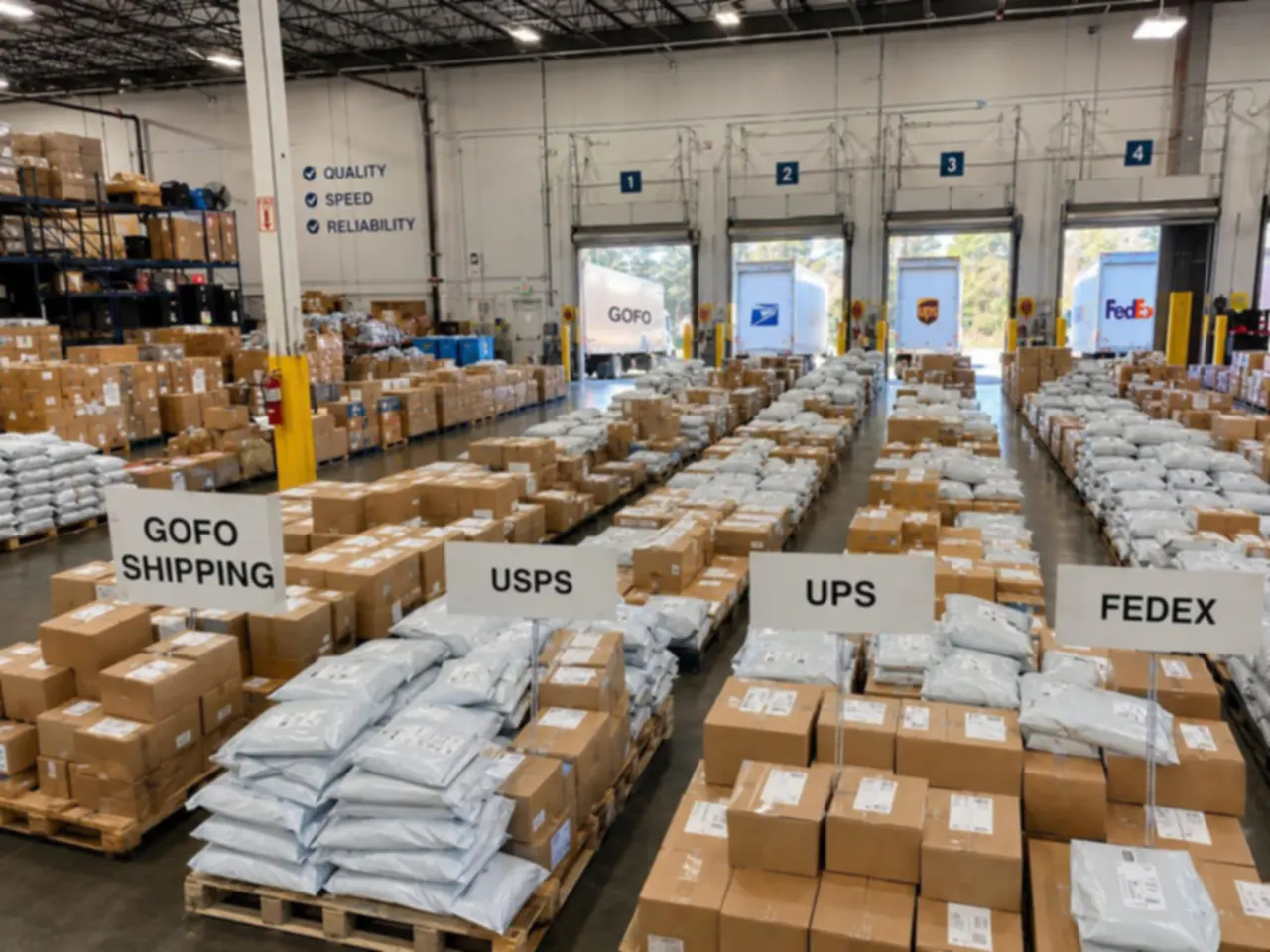
One honest note. Good packing cuts breakage a lot, but it can't make a parcel indestructible. Orders leave our building with GOFO, UPS, USPS and FedEx on scheduled pickups Monday through Saturday, and once a carrier has the box, damage in transit is between you and that carrier. We aren't responsible for carrier damage, so carrier insurance and claims are worth sorting out on your end for high-value items.
Want a number for your own products? Request a quote and tell us what you sell, how fragile it is and roughly how many orders you ship a month.